Joyce Vance hosts #SistersInLaw to discuss Trump’s unusual payments to his staff and his promise of $5,000 to voters if they vote for Republicans during the midterm elections. Then, the #Sisters dissect the gerrymandering battle in Missouri, looking at how the SCOTUS ruling impacts the state, the grassroots movements demanding representation, and the challenges posed by election deniers holding key positions in state government. They also explain the legal issues surrounding Trump’s continued attempts to end mail-in voting, and the effect of the limited injunction stopping the administration’s plans.
Remember to send in audio questions to SistersInLaw@politicon.com for the #Sisters to answer on their new companion podcast, SistersInLaw Sidebar! It airs Wednesdays wherever you normally get your podcasts!
Get the brand new ReSIStance T-Shirt, Mini Tote, and other #SistersInLaw gear at politicon.com/merch!
Additional #SistersInLaw Projects
Check out Jill’s Politicon YouTube Show: Just The Facts
Check out Kim’s Newsletter: The Gavel
Joyce’s new book, Giving Up Is Unforgivable, is now available, and for a limited time, you have the exclusive opportunity to order a signed copy here.
Barb is on a book tour! You can also order Barb’s new book, The Fix. Her first book, Attack From Within, is now in paperback.
Add the #Sisters & your other favorite Politicon podcast hosts on Bluesky
Get your #SistersInLaw MERCH at politicon.com/merch
Email: SISTERSINLAW@POLITICON.COM or Thread to @sistersInLaw.podcast
Get text updates from #SistersInLaw and Politicon.
Mentioned By The #Sisters
From Joyce: An Update: The First Circuit Protects Voting By Mail From the Trump Administration
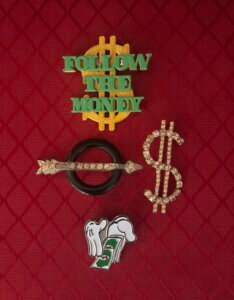
Jill’s Pins

Support This Week’s Sponsors
Smalls:
For a limited time, get 60% off your first order, plus free shipping and treats for life when you head to Smalls.com/SISTERS
DeleteMe:
Get 20% off your DeleteMe plan when you go to joindeleteme.com/SISTERS and use promo code SISTERS at checkout.
Blueland:
Get 15% off your order of green cleaning products at blueland.com/sisters
Quince:
Upgrade your everyday. Download the Quince app for app-exclusive offers, or go to quince.com/sisters. Get free shipping on your order and 365-day returns– now available in Canada and the UK, too.
Factor:
Head to factormeals.com/sil50off and use code sil50off to get 50 percent off and 1 free breakfast item per box for 1 year, while supplies last, until 10/31/2026.
Get More From The #SistersInLaw
Joyce Vance: Bluesky | Twitter | University of Alabama Law | Civil Discourse Substack | MSNBC | Author of “Giving Up Is Unforgiveable”
Jill Wine-Banks: Bluesky | Twitter | Facebook | Website | Author of The Watergate Girl: My Fight For Truth & Justice Against A Criminal President | Just The Facts YouTube
Kimberly Atkins Stohr: Bluesky | Twitter | Boston Globe | WBUR | The Gavel Newsletter | Justice By Design Podcast
Barb McQuade: barbaramcquade.com | Bluesky | Twitter | University of Michigan Law | Just Security | MSNBC | Attack From Within: How Disinformation Is Sabotaging America | The Fix
Joyce (00:10)
Welcome back to Hashtag Sisters in Law with Jill Wine-Banks, Barb McQuade and me Joyce Vance. Kim will be back soon. We are gonna miss her this week. Boy, do we have a lot going on. We’ll be talking about some very unusual payments that Donald Trump has made to federal employees. We’ll also take up gerrymandering in Missouri, and the most recent updates on Trump’s effort to suppress mail votes. That’s a lot to dig into, but before we do it,
I’ve got a super important question for y’all. this morning, as y’all know, I w I was on a flight, early morning flight, needed some caffeine, went to the airport Starbucks, and there it was, a thing of beauty. The pumpkin spice latte. Apparently it’s been back for a couple of weeks, but I don’t go to Starbucks too much. It is Friday, September eleventh, as we’re taping the show, and of course our hearts go out. It’s important, I think, for us always to acknowledge.
To the victims and the families from September 11th. That date hits us, you know, in a very startling way. And it’s good for us to get to be together today, for the three of us to get to talk, for us to talk with all of you, our listeners, who we adore. but but I do have one non-serious question for the day. And the question is: is September 11th, is this part of September too soon for pumpkin spice lattes, or is it okay?
Barb (01:36)
Well, I’ll jump in on this one. I too want to acknowledge first the the loss of September eleventh on today’s twenty-fifth anniversary. I think we can’t proceed without commenting about that. remembering the heroes and the victims, with our gratitude for those heroes, some of whom are the same people. But, you know, one of the great things about
my Irish wake tradition is that you have to be able to laugh at things and to remember that life goes on, even with frivolity. And so this Joyce in the spirit of a frivolous but important question, I will answer for you. I think it’s too early. And here’s why. I cling to the summer. I love the summer like nobody loves the summer. Summer is the best. It’s carefree, it’s barefoot, it’s swimming,
It’s walking outside without a coat, and here in the northern climbs that matters a lot. And although I enjoy the fall, it has its time. And until September twenty first, when we have that autumn solstice or equinox, whatever we call it, I’m not ready for fall. It’s comin’. But right now I still want to squeeze out every last ounce of summer, so keep your pumpkin latte on the shelf until about October first.
Joyce (02:53)
Yeah, I am so with you on that. It just felt way too soon. Jill, what about you? Are you ready for fall or not yet?
Jill (03:00)
Well, first I wanna join in the comments about nine eleven. if you’ve been watching any of the coverage, it is so emotional. It’s really devastating. I think we were all victims. It’s obviously not suffering in the same way that the families of those who perished in the disaster, or the brave heroes who crashed the plane in a field instead of in Washington DC. But so
w and I am wearing a pin for nine eleven in commemoration of that. but as to your question about is it too soon? As far as I’m concerned, it’s always too soon because I’m not a fan. I know it it’s gonna be a strange thing and people are gonna write, What, are you crazy? I I I like chai latte. I like other th I just I like cinnamon and I l just not a pumpkin spice latte person. So it’s always too early. But I do agree with Barb if you’re gonna have
anything like that. And especially in Chicago where September and October are usually really, really nice months. It’s not until October that I fear that we’re getting into winter. So I don’t want to have anything that makes it look like it’s already getting to winter because we don’t have a fall. We go from summer to winter and or road construction to winter. So what can I say? I I I don’t like it.
Joyce (04:24)
Yeah, I’m with y’all. We’ll hold on for as long as possible. You know, last night we had dinner with neighbors and we were talking about September eleven memories and talking about cause because we had all left work that day and Bob and I, my husband and I walked to our kids’ school together. They went to school downtown. So we were able to walk over and pick them up and talk with them about what was happening. But we were all talking about how we processed it with our kids. And I was looking at how young the flight.
personnel were, you know, the airline attendants this morning on my flight, and I was wondering if they were even old enough to consciously remember that day, which really is is sort of hard to believe that we are twenty-five years later for an event that was so tragic, so incredibly important, shaped so much of what came after. And here we are.
We love cats, and cat owners can’t say enough great things about smalls. Like a lot of you, for the longest time, we thought the cat kibble in the grocery store was fine. You know it’s right next to the food we buy for our family, so it has to be good, right? Wrong. Once we found out it was mostly filler corn and ingredients you can barely pronounce, we knew cats everywhere deserved better. And after making the switch to smalls,
My cats have a lot more energy. Their fur seems softer, it’s more luxurious too. If you’re a cat parent, there’s no better time to try smalls than right now. Smalls.
Jill (06:04)
Fresh Cat Food is protein-packed recipes made with preservative-free, 100% human-grade ingredients you’d find in your own fridge. And it gets conveniently delivered right to your door. In addition to Joyce, they have so many outstanding reviews. Christina P said that, and I’m quoting her, the difference Smalls has made in my 15-year-old cat is amazing. She eats it all up, has gained some weight, and is playing like a kitten again.
Barb (06:32)
I’m not surprised. Cats use protein as their main energy source. And more protein means more fuel and sustained energy. Small’s fresh, gently cooked, preservative-free cat food gives them high protein and improved hydration for strong bones and toned muscles. Plus, a balanced diet leads to less shedding, fewer hairballs, and more silky shine. Even better, lots of the nutrients in Small’s food are digestible, so less junk comes out the other end.
That means less cat related odors and that’s something we can all appreciate.
Joyce (07:05)
Yeah, absolutely. And especially the fewer hairballs thing, which has been a real feature of using Smalls in our house and something that I’m very appreciative for because surprise, you know, who is it that you think that cleans up after hairballs? It’s always the mom, at least in my house. And the team at Smalls is so confident your cat will love their product that you can try it risk-free. That means they’ll refund you if your cat won’t eat their food.
So stop serving your little carnivore a bowl of processed shortcuts. For a limited time, because you’re a sisters-in-law listener, get 60% off your first order plus free shipping and free treats for life. Head to smalls.com slash sisters one last time that 60% off your first order plus free shipping and free treats for life when you head to smalls.com slash sisters. The link is in our show notes.
Jill (08:03)
Mm.
Today we have some really interesting news about following the money. I am wearing my 9-11 pin today, but I’m going to post on our show notes some of my pins that I would have worn for this subject about following the money. So you’ll have to look at our show notes to see those pins. And I’m sure you’ve all read about the facts that I am referring to, where Donald Trump has made some pretty significant cash payments to some of his staff.
He paid forty five thousand dollars to three women who work for him, including the now infamous Natalie Harp, also to a deputy operations director and a communications director, and then twenty thousand dollars to his co defendant, Walt Natua in the Mar-a-Lago documents case. And interesting
Barb (09:02)
It’s interesting.
Jill (09:02)
because he says, of course, that this has nothing to do with their work, but the two
Three women earn $150,000 plus $45 is $195. Walt Natua, his former valet and co-conspirator, earns $175 plus 20 equals $195. So the question is, you know, he says it’s not related to their work, but even if it isn’t, Joyce, is this legal? What are the governing laws and ethics?
Joyce (09:33)
No, it’s absolutely not legal. It’s not even a close call. The only thing that makes this fuzzy is that the Supreme Court has said that the president of the United States can’t be prosecuted for committing crimes. But let’s put that to the side for a second. And of course we’re all well aware that there’s a distinction between official acts and and acts that are not committed in an official capacity. We’ll just leave that aside for the moment.
And talk about the legality of the conduct. Because under 18 US Code 216, someone who receives a government salary but who takes these i additional payments, or someone who makes additional payments is committing a crime. It’s a misdemeanor in most cases, but if it’s done willfully, it can be a felony.
And so I think what Donald Trump has done here is he’s equated these payments that are being made to the kind of bonuses that he would give out in a private business. And that’s great in a private business context, you can do whatever you want. But that’s not true in government where there are strict limits on even gift giving.
Among employees, it’s all spelled out in the regs. We were very careful in my office, you know, particularly if you had a legal assistant y you just loved everybody that that person worked for would pool their resources so that we could give them maybe a hundred dollar gift certificate at Christmas time. That’s the norm in the government. This is not the norm and it violates the law.
Jill (11:05)
So, Barr, Joyce has talked a little bit about the consequences because it could be a misdemeanor, it could be a felony. and the thing is, there is a five-year statute of limitations. So is it possible that there could be any consequences, even if it was a misdemeanor or a felony, or do you think this does fall within his constitutional responsibilities that would be covered by a
immunity.
Barb (11:36)
So several interesting questions there to to unpack. you know, Trump has said, I always pay my employees a bonus at holiday time. It’s what I do. You do you cannot run government like a business. You know how we hear this all the time, like, it’d be so great if we have a businessman running the government ’cause they’ll run it like a business. Government is not business. The goal of business the business of business is business, to make money. The business of government is to serve the people and make sure
that there is public safety and that there is public good that is achieved and those are very different things. And the problem, the reason we have this law on the books, is that it could buy somebody’s loyalty. Natalie Harp and Walt Mata don’t work for Donald Trump. They work for the United States of America and they get a salary from the United States of America and their loyalty should be to the United States of America. But if you’ve got somebody giving them tens of thousands of dollars on the side, it could divide their loyalties. It’s a conflict of interest.
You want to keep happy the hand that feeds you. And so you might do things that are in the president’s best interest, but not necessarily in the public’s best interest. So that’s why this is a real crime and a serious crime. Five year statute of limitations. That means that even after Trump is out of office, the next Department of Justice could conceivably prosecute this case because the the statute won’t end if this bonus occurred in
Holiday time of 2025, that means holiday time of 2030 is the expiration, and we will have a new president, God willing, and a new attorney general and justice department by then. But this interesting question is, does presidential immunity apply to this? And I think the answer is we don’t know yet. I think there is a whole body of doctrine yet to be developed that many future law students will study in constitutional law regarding presidential immunity.
That we have where we have only scratched the surface. We’ve got this opinion by the Supreme Court that talks about the outer perimeter of the president’s official duties. And so when the president is giving orders, those are his official duties. It is not part of his official duties to pay his employees. And so I would argue that this is beyond the scope of his constitutional duties. I imagine someone would argue back that maintaining your staff and compensating your staff.
is part of your constitutional duties. But because it’s illegal, it is not the president’s job to pay these people. It is the government’s job to pay these people. I think those are different. So I would argue I’d be willing to take this case and take my chances in the courts.
Jill (14:13)
I’m with you on that. We can be co counsel for whoever wants to bring this case, for sure.
Barb (14:18)
You and me. You and me, Jill.
Jill (14:20)
Okay.
Joyce (14:21)
Do
I skip a role here, Tim?
Jill (14:24)
Absolutely.
Joyce (14:25)
Totally with you on this, Barb. I mean, this is clearly not a presidential duty. He can make the argument, but that doesn’t make it so.
Jill (14:34)
Yeah. And and Joyce, l let’s follow up on something else that you said, which is, you know, does history shed any light on this? has there ever been a president who has paid a cash bonus? And another issue, just based on my experience in corporations, the favoritism that may be shown to four staffers could piss off everybody else in the White House. And I I’m assuming now that
We found out about this, of course, because it was disclosed in the financial disclosure required of the staff that if anybody else, if Susie Wiles or anybody else had gotten a large cash payment, it would have been flagged in the same way that this was. So that somehow these four people, one of whom was in a catering van to safety with the president in an unusual circumstance. I I I mean, I’m just saying, is there any prior history that would
Justify this, and you know, you’ve already said you can’t do it in private, or maybe Barb said, you know, even if you do it in private, you can’t do it in the government. What what’s going on here?
Joyce (15:39)
Yeah, I mean I think that this is so interesting. You know, I recall that it was a little bit unsettling inside of the Justice Department during the George W. Bush administration when he decided that it was okay to go ahead and have the Justice Department pay bonuses to certain political appointees. Typically bonuses were paid to career people in very modest amounts, but during the Bush administration
Political appointees were given as much as $15,000 in in bonuses on maybe salaries that probably maxed out back then, don’t hold me to it, but I’d say $145,000, $150, might have been about the top in U.S. attorney’s offices there, maybe a little bit more in Maine justice. So $15,000. What’s so shocking about what Trump is doing is that he’s paying it out of his own pocket.
And that’s unprecedented. And to the point that Barb makes, the reason we have rules about government ethics is to ensure that government employees, that their loyalty is to the people that they serve, to the Constitution, to the rule of law. And when Donald Trump is dipping into his wallet and giving you $45,000, I you know, I don’t think that you have to be a rocket scientist to understand what’s going on there.
Jill, you make this really interesting point about just giving them to some people. It’s possible that more payments will come to light. Whoa. But you know, something that’s very interesting is when these financial disclosure forms come out, they can be sort of difficult to read. Often money is sort of in bands, so you don’t know exactly what the dollar amount is. And
Not infrequently in the past, people have tipped off reporters and told them what they should go look at in someone’s financial disclosures. I would not be surprised if that happened here because, you know, if if you’re not one of the chosen few that gets the payment, I gotta believe there’s some folks that may not be too happy.
Jill (17:44)
Interesting point.
Barb (17:46)
And do remember when the Trump organization got into tax trouble, the criminal case against them, remember the tax case? Yes was that Trump was being cute with payments, side payments to some of his officials. Alan Weisselberg, who was the CFO, was charged with a crime for this. He would pay people in kind, like, I’ll pay for your penthouse apartment or I’ll pay for your kids’ school. But then they didn’t count that as income. So it was a way
Of making their salary go up by hundreds of thousands of dollars and nobody was paying taxes on that. So Trump has a history of being cute with some of these kinds of side payments.
Joyce (18:21)
You know, it’s so funny, Barb. I just used that case involving Weiselberg as a as a sort of an exercise with my prosecutorial discretion class in class. I took those facts and we sort of used that to determine, would you wanna onboard this person as a cooperating witness? Knowing that they had all of this baggage. And I watched, you know, they they were just completely not persuaded. They were like
Wait, you want me to use this guy as a witness? And he took money for car service and and for his apartment and and for his grandkids, you know, school tuition, and they were just not interested in signing him up as a witness, not knowing who it was or what the facts were based on. And I was amused by their their good instincts and their good reaction there. But you’re absolutely right. I mean, it’s really interesting that he would reference his private business.
a as a frame of reference for making these kind of payments given how unsavory his past actions are.
Jill (19:21)
Well, and interestingly you’ve raised another, I think, really interesting question about taxes, because gift recipients don’t pay a tax on money they get as a gift. So in the same way, even though we might think of this as part of their salary, which would be taxable, a gift isn’t. So they’re not paying it. But also the donor, the person who’s giving the money, doesn’t pay a tax until he or she
exceeds a lifetime maximum, which is in the millions of dollars. And so you gotta wonder, how did Donald Trump report this? And is he at the maximum? If he’s been doing this for years and years and years at his own corporation, a gift is a gift, you know, and they all accumulate. And now we know that he has more than another hundred thousand dollars in gifts. So it’s I I think it’s pretty interesting. but before we leave the subject of follow the money
I’m sorry, but there is another question that I have to ask you because there was an announcement straight from Texas Trump Fest or Trumpalusa or Trump a loser, as I am seeing it called on threads, that Trump promised right there in the open to pay every single adult in the US five thousand dollars if the Republicans win. So, Barb, first of all, is this possible? Will it happen?
Okay, it’s a rhetorical question though.
Barb (20:52)
So first let’s talk about this. It is a crime to buy votes, to offer to buy votes, to solicit buying of votes, or to sell your vote. So it’s 18 United States Code Section 597. So it is a crime on the books. Now what Trump floated doesn’t quite fit that promise, though it sort of has the gist of it, right? He promises to give every adult, not every voter, five thousand dollars.
If Republicans win the House and Senate. Certainly this incentivizes people who have a vote to vote Republican, because that means if if this condition is proves true, they will receive this $5,000. He did not say where this money would come from. Presumably, this would require a congressional appropriation. I don’t think Donald Trump, stingy as he is, and as much money as he has collected through his you know corrupt business practices in the past couple of years.
I don’t think he has the money to give $5,000 to every adult adult in the United States. So it feels more like an empty promise, an empty platitude. but I think it would it it would have some problems in terms of proving a case that this was a real offer. And I think part of it is, because he just talks about it, is it’ll be the Trump dividend. You know, I I can imagine a defense where he says something like, I was just floating.
a policy proposal to Congress that and you know if I if I have the support in Congress with a Republican majority, they could make this thing true and this would be good for the economy. So, you know, one of the challenges of the criminal law that I think is sometimes not appreciated by the public is this feels wrong, this feels like a violation of the statute, this feels like he knows exactly what he’s doing. but that’s not good enough in a criminal case. because in our country we
sort of stack the deck against criminal prosecution, you have to be very precise. You have to violate the both the act with the intent very specifically of what a statute prohibits. And I think because of the imprecise language that Trump used here, it would be pretty easy for him to wiggle out of it.
Jill (23:07)
Yeah. Mensrea, one of the things you law professors love to talk about. Yeah. Quid pro quo. I mean, you know, I’ll give you this if you do that. Maybe hard. And so there’s I guess we have to just end with the fact that it is a crime under five ninety seven. And I wanna point out that it’s only a two year maximum penalty, although it does also have a two hundred and fifty thousand dollar penalty, but that doesn’t seem like enough to punish.
Barb (23:37)
I don’t wanna minimize what he’s I don’t wanna minimize what he’s doing here. Because I think just by floating it, even though he uses a little bit of vague wording to make it seem you know, make it difficult to prosecute him, there will be some voters out there who say President Trump says if Republicans wins, I’m gonna get five thousand dollars. And they will vote Republican because of that. So it’s a very shrewd move by Trump. If he gets even a few votes, he will have succeeded.
Joyce (24:00)
But you know, who could put a stop to it is Congress, right? Because Congress has the power of the purse and all that they would have to do would be to pass a law prohibiting it, saying president can’t do this, we haven’t blessed it. And and I think it just speaks to how dysfunctional Congress is right now. So if people are looking for reasons to vote, there’s the mythical five thousand dollars that you’re not gonna get, just like you didn’t get your doge surplus check. Right.
Or there’s the the notion of actually restoring good, responsible government with checks and balances. That’s sort of a no-brainer for me.
Jill (24:35)
And I gotta point out I have one other pin that’s a picture of Stormy Daniels and the wording the only contractor Donald Trump ever paid. So don’t expect to get your five thousand dollars, guys.
Joyce (24:57)
The internet is still the Wild West, and it’s full of stalkers, scammers, and hackers. You know you should protect yourself, but how? It’s easier than you think. Here’s what you do. Go to www.joindeleteme.com slash sisters and enter code SISTIS get twenty percent off DELETEME.
Jill (25:17)
That’s such a great deal. Delete me removes your personal information that’s being sold online, which is why you really need to get it. In the age of AI, we’re all especially vulnerable to scammers using our personal data that’s floating around on the internet and it can be used against you. Have you ever Googled yourself and found your home address, phone number, or the name of a family member? I bet you have. It’s unsettling, and there’s a lot worse out there. The good news is
Delete me can help.
Barb (25:47)
Delete Me does all the hard work to wipe your personal information from data broker websites, and you can get an individual plan for a little more than eight dollars a month. Even if you’re not a public figure in the internet age, all of us are potential targets for malicious actors or blackmailers and worse. Especially if you have kids in your family, Delete Me is a must. Once we got started with them, the peace of mind was such a relief. I trust them to help protect me, my sisters, and my loved ones.
And I know they can help keep you and your family safe too.
Jill (26:20)
So take control of your data and keep your private life private by signing up for DELETEME. Now at a special discount for our listeners, get 20% off your Delete Me plan when you go to joindeleteme.com slash sisters and use promo code Sisters at checkout. The only way to get 20% off is to go to www.joindeleteme.com slash sisters and enter code Sisters at checkout.
That’s www.joindeleteme dot com slash sisters code sisters, and you’ll find the link in our show notes.
We’ve all been trying to make small swaps in our consumer habits that are better for the planet, and one of the easiest places to start has been cleaning products from a place that I love. I love finding options that reduce plastic waste without sacrificing performance, and after learning about the microplastics that many household items have in them, we’re mindful about what we bring into our homes. They aren’t good for us, our pets or the environment.
That’s why we wanted to tell you about Blue Land.
Barb (27:39)
Blue Land makes dish, laundry, and other household cleaning products designed to reduce single-use plastic, and their cleaning tablets are 100% plastic-free and microplastic-free. They’re independently tested to perform alongside leading brands, and the formulas are made without dyes, parabens, or harsh chemicals. Instead of repeatedly buying plastic bottles, you just use tablets, which is a great way to cut down on waste at home.
Now I love not having to choose between the safe option and what actually gets my house clean. And you will too. Like us, Blue Land believes that hardworking, clean products can be the norm, not the exception, so that you can do better for your family and the planet at the same time.
Joyce (28:25)
We strongly recommend Blue Land’s new power duo, dual layer laundry detergent tablets. Experience has proven that they lift the toughest stains. They’re designed for tougher laundry loads that need extra stain and odor fighting power and are great for sweaty workout clothes, kids’ messes, pet bedding, food stains, grass stains, and more. And in classic Blue Land fashion, they’re hypoallergenic and safe for sensitive skin with a plastic-free, microplastic-free formula.
The pre-measured mess-free tablets make it easy. Just drop them directly into the drum and wash as usual. There’s even a line of tablets for your dishwasher and toilets too.
Jill (29:07)
And they’re all great. But best of all, Blue Land is a certified B Corp and is Leaping Bunny cruelty-free certified. Their formulas are EPA Safer Choice certified, and many products have also earned Cradle to Cradle’s Gold Material Health Certificate. Put it all together, and it’s easy to see why their products are trusted in over one million homes, including ours. So if you’re looking to make a small change in your routine, you can get
fifteen percent off your first order at blue land dot com slash sisters. That’s fifteen percent off your first order at blue land dot com slash sisters. And the link is in our show notes.
Barb (29:59)
Thursday, the U.S. Supreme Court appeared to have ended a chaotic battle raging in Missouri over its elections. Joyce, you’ve been doing an excellent job of covering this topic in your civil discourse substack about all that’s occurring in Missouri. And I I noted that you you pointed out that Lawrence Hurley of MS Now had
made the the reference that Missouri should now be referred to as the show cause state in light of how many different times they’ve been hailed into court to talk about some of these things. So I’m wondering if you can just give us a brief summary of the back and forth legal battles we’ve been seeing in Missouri in recent weeks about their maps.
Jill (30:42)
Electric.
Joyce (30:44)
Yeah, you know, this has been like watching a ping-pong match, but as of Thursday, it does seem to be settled. And here’s the bottom line. Missouri will use its old 2022 congressional map in in November for the upcoming elections. What Republicans wanted to do, Denny Hoskins, the Secretary of State, who is aided by their attorney general, a former I guess, Bush-era Republican U.S. attorney, Catherine Hardaway.
the their goal was to put in place new maps that the legislature adopted in twenty twenty five. And here’s the deal. Missouri has eight seats in Congress. Six of them are held by Republicans right now, two are held by Democrats, with one being considered a pretty safe seat, Eldridge Cleaver’s seat. and the notion had been that with the new maps it was possible that Missouri could have gone all Republican.
I had gone back and looked up the percentages of voters, and something like 22, 23 percent of all registered voters were Democrats, another 17 were independents. The notion that there would be no Democratic member of Congress from Missouri is really sort of a half-baked notion. So that gives you a sense of the playing field, right? And what happened, and this was such a long, drawn-out thing, but there had been an effort by a
pro-voter, anti-gerrymandering group to put the issue of the maps in front of Missouri voters and to let them vote on it and decide. And they had gotten 300,000 signatures, enough to hold a referendum. So that was what it looked like was gonna happen. There would be the use of the older maps with the referendum on the ballot in in November, and people in Missouri could decide how they wanted to go forward.
Until the Secretary of State gets this great idea. Let’s just go ahead and use the twenty twenty five maps. And that of course leads to a flurry of litigation. What ends up happening yesterday is the Supreme Court for a second time just says, no, stop the madness. You’re gonna use the older maps. Because although there had been this case that had made its way to the Supreme Court, that happens because there’s
Both a case happening in the state system in Missouri, where the Missouri State Supreme Court has reached that same conclusion, use the older maps. But there’s also a federal district judge, a Trump appointee, who comes out the other way and says, no, use the 2025 map. And so given that there were these two conflicting rulings, the Secretary of State decided that he knew where he would take that, and he was
Planning on using the newer maps that would give Republicans such a decided one way advantage in the state. Now the Supreme Court has said no, use the older maps for this election.
Barb (33:41)
Boy, Joyce, listening to all that, if if I were an an emoji, a a human emoji, I would be that one that’s got the eyes with the like the curly circles in it.
Joyce (33:52)
It’s so confusing.
Barb (33:54)
My gosh. but you know, think about what it is they’re trying to do there. They’re trying to put more than a thumb on the scale. As you say, there’s 25% of the electorate is democratic and 17% is independent. And what they want to do is to
take all those little pockets of Democrats and put them in different you know, break all up so that they’re so diluted that they will not be able to elect a member of Congress of their choice. You can basically almost erase them out of existence if you put them into a district that is otherwise majority Republican. And it’s it’s such a disservice to voters to manipulate the maps in that way.
but it sounds like the story has a happy ending. Jill, tell us about what the Supreme Court did on Thursday and if you think this is the end.
Jill (34:48)
Well, it’s very hard to ever predict because they are so persistent in going again and again and again. enough is never sufficient for them. But the second ruling did say that the state Supreme Court is gonna stay in effect and that the map for this election will be the map that preceded the attempt to get a referendum on what map should be used. So
There is a good chance that there will still be two possible Democratic representatives out of the state as a result of that. and, you know, the Missouri Supreme Court had invalidated the GOP gerrymandered map, which as you’ve said just broke up into little groups, the whole population of Democrats, so that they couldn’t, there’s never been a clearer case of
what is political gerrymandering, which unfortunately, as we know, the Supreme Court has said, that’s okay. Even when it is actually equivalent to racial gerrymandering, if you look at the population, no, it’s not. If they say it’s just because we want to disenfranchise Democrats, that’s okay, which doesn’t seem okay to me anyway. But there is one remaining question that hasn’t been answered. So it’s not quite over. And that is the map used for the primary
was the new gerrymandard map. Now they’re going to be voting for members of Congress based on the old map. So it and if you look at, and maybe we can put this in our show notes, if you look at the maps, there’s quite huge differences that you can see obviously how they’ve played with this. So the question is if you were nominated to represent District X, which is now
10 times bigger or one time well or 10 times smaller. Who’s the candidate for that district? Is it someone from a different district? So th there have been several solutions hypothesized. One is that whatever number district you were voted to be in the primary, in the primary, you would stay in that district regardless. the other is that
they would have to have a state appointed by the state parties. They could pick who is the candidate for each of the districts. And apparently there may be something in the state law that would allow that. So there is a solution. They’ll have to decide which way it’s gonna go. but it is going to be complicated because they’ve changed the map in the middle. And if there’s ever been a case where you have a situation where you should not be interfering in an election
This close, this should have been cut off a long time ago so that they didn’t go to the primary ballot box with a question about what map would be used. Yeah.
Barb (37:49)
the primary for District 14 and I’m going to the general for District 12. Yeah. It’s kind of strange. And then also, of course, in November, voters, at least two-thirds of whom are Republicans, are going to vote on this map. And it may be that they adopt the new map ultimately. And because the Supreme Court permits these political gerrymanderings, they say it it should be resolved in the political process. Well, if you keep
stacking the deck in favor of one party in the political process. The political process is not going to be able to resolve it. And so it could be that the majority of voters in Missouri ultimately do adopt this and in the next election they’re able to use these new maps. Joyce, why is it that we are suddenly seeing all of this redistricting and gerrymandering in 2026? Wasn’t redistricting traditionally something that occurred only after the
decennial census because people move in and out of states and in and out of voting districts and so that’s the time that legislatures typically take stock and decide to, you know, r re redistrict. Why are we doing this in twenty twenty six? This is not a census year. Yeah.
Joyce (38:59)
I mean, there’s there’s an easy answer, and it’s Donald Trump who explicitly called upon Republican states, I think he started with Texas, called on them to create more safe Republican seats in Congress. Obviously Trump has been sensitive to and concerned about losing, his party losing. He won’t be on the ballot at the midterm elections. And so this became a a major issue. This was what led to the entire process of states redrawing their maps.
Missouri’s a little bit different. They had these maps that had been redrawn in 2025. And I’m not certain what exactly led to that, if this was some early part of the Trump mania, or if they had decided to do it for different reasons. But the same analysis holds true because this is a state who the new maps would be completely out of whack with the population.
And one principle that even this Supreme Court has looked to in cases like the Alabama gerrymandarin case, for instance, is the notion that when you have a state that’s twenty five, thirty percent, you know, black or democratic, however you want to count those numbers, that it just doesn’t make sense to completely disenfranchise those citizens. And that’s what this is really about.
Barb (40:15)
Yeah, you know, this there’s a lot of negative about what’s going on here. But there’s also, Jill, to me, some some success here and some reason for hope. as Joyce mentioned, in Missouri, this effort, this ballot initiative was brought by a group called People, not politicians. and they were involved in these legal challenges. Do you think there are lessons to be learned there about ordinary citizens of what ordinary citizens can do by organizing?
Jill (40:43)
I do, and I think it’s a lesson that we’ve learned multiple times in our history, and that is that people power is an effective tool, and that none of us should give up, that each individual can come together. Voting is important, supporting organizations that f support voting rights that bring these kinds of cases is an important thing for us to do. It works, it has succeeded in numerous occasions.
you know, going back to Watergate, the president resigned because of public pressure. And so we need to keep that in mind, that it is worth joining with other like minded people in different organizations that can help bring about a restoration of our democracy, of the basic principles of our democracy, and that there is hope. So as Joyce ends her substack every night, we’re in this together.
And let’s not forget it.
Barb (41:43)
to the people. I love it when Jill talks hippie, you know, from her 60s and 70s origins. That’s awesome. Joyce, let me ask you about something that’s alarming. In 2016 and 2020, one of the guardrails we had in place was secretaries of state who upheld the rule of law and it it was across party lines. We saw the Republican Secretary of State in Georgia Stantol in 2020, Brad Raffensberger
There was Rusty Bowers in Arizona. He I think was the Speaker of the House, but he, you know, he he would he was a a good a good guardrail. Now we’ve got election deniers occupying some of these positions. are you concerned that we could see changes in the rules or changes in the way votes are counted in the November elections? I know Trump has said more important than the rules or the issues or the candidates are the people who count the votes. Should that concern us?
Joyce (42:37)
Yes, I mean it absolutely needs to concern us, right? This is a different situation. We understand that the distinction between Trump one and Trump two as administrations is that the adults are no longer in the House. And I think that’s what you’re talking about here as well. The fact that we have people serving as secretaries of state who are unable to make this really important distinction that we all have to make when it comes to voting. You know, who you vote for.
It’s a political choice, right? It’s up to candidates to convince you. Whether or not you get to vote, that’s a fundamental American right, including having your vote counted. And the idea that we now have people in these key positions who don’t understand or maybe understand but disregard this distinction is really troubling. you know, this is one of those moments where I’m proud to be a lawyer. I’m watching all of the preparation for this election.
And it’s incredible there are so many different lawyers in different groups with different clients thinking through what the risks are and preparing for them. Just today there’s new litigation seeking an injunction that will keep ICE agents from being at the pools. That’s just been filed. I think these issues with local secretaries of state and how the votes are going to be counted are very much on lawyers’ minds right now.
Some of this will be done locally, some of it might be done more collectively, but what we need to do, what we can contribute to this is being on the lookout for what’s happening in our local areas and making sure that we surface it. If if there’s an area where a Secretary of State or a local county official appears to be intent on not conducting free and fair elections, that’s important information to surface.
Barb (44:39)
You know those pieces in your closet that you find yourself reaching for over and over again? The sweater that somehow works with everything, the jeans you know will always fit just right, or the bag you carry everywhere. Those are the pieces that earn a permanent place in your wardrobe, and that’s exactly what Quince does so well.
Jill (44:58)
Quince makes elevated everyday essentials using premium materials like Mongolian cashmere, organic cotton, and washable silk. The designs are timeless, thoughtfully crafted, and made to be worn again and again. Their 100% Mongolian cashmere sweaters start at just $50, giving you the softness and quality you’d expect from a luxury brand without the luxury price tag. Quince also offers premium stretch denim.
Leather bags and footwear, and beautiful fourteen karat gold jewelry that can be the finishing touch to pull together an entire look.
Joyce (45:35)
Everything at Quince is priced 50 to 80% less than similar brands. They work directly with ethical factories and cut out the middleman, so you’re paying for quality, not brand markup. Quince has a great washable stretch silk blouse that I adore. The material feels amazing, the style is perfect for relaxing at home, enjoying the sun on vacation, or taking care of business.
But there are so many great things, it’s always really fun to peruse the website and see what you can find that’s new. There’s nothing better than looking your best, but Quince is about so much more than just apparel. They make well-designed pieces for everyday living and bring that same approach to everything they make, from hotel quality bedding and bath to kitchen essentials and thoughtfully designed furniture.
Barb (46:24)
Fall pieces you’ll reach for most at Quince. Download the Quince app for app exclusive offers and go to quince.com/slash sisters to get free shipping on your order and 365-day returns. Now available in Canada and the UK too. That’s qu-ince.com slash sisters. The link is in the show notes.
Joyce (46:55)
So y’all, I I don’t know if y’all feel the same way about this topic that I do. This is the topic of Trump’s plans to interfere with voting by mail. But it feels like it’s become evergreen. It’s perennial. We’ve been talking about it for months. You know, first there was Trump’s executive order. I think it was, if it wasn’t day one, it was really early in this administration. The executive order, he gave it a pretty name. I’ve always called it the executive order to interfere with mail voting. we had his
Plans for implementing the order, and of course, there have been multiple legal challenges to those plans. So we’ve discussed with you, our dear listeners, a whole layer of lower court cases, of injunctions, of appeals on procedural issues, like whether the case was ripe for the courts to decide. That’s been our new legal doctrine in the last couple of months when we’ve educated y’all about ripeness. Then the Postal Service issued a final rule for mail-in voting.
And now we’ve got to talk about this issue all over again. We’re off to the races with a new round of litigation because Judge Talwani, the district judge in Boston, who’s handling two of the key challenges to this whole mess, one that was filed by the League of Women Voters, another that was filed by 25 states attorneys general. Judge Talwani has issued another injunction to keep the administration from putting its plans to work. So let’s let’s start with that.
This is a limited injunction and that may be one of the keys to deciding this situation. Jill, can you clarify what the injunction actually does?
Jill (48:35)
Yes, as you have said, it’s very carefully crafted and very limited. It only applies to the midterm elections. She has said you can’t do this now for many reasons. So coming down the road, there will be, I am sure, more challenges that will go into whether or not this can be implemented for the general election. But for now, it cannot be used for a full
valid by mail in the midterm elections.
Joyce (49:10)
Yeah, and and you know, one of the other important things I think this is interesting. You have to read the footnotes in in her decision to get this, and I’m a footnote reader. But she also doesn’t prohibit states that voluntarily want to adopt Trump’s plans from adopting And I’m so fascinated by that. I feel like it puts Republican states on the horns of a dilemma. We’ll talk about it a little bit. Some of them have said
They see nothing wrong with that, and so she’s gonna let them choose. Do they really wanna open this can of worms in their states? Barb, the most recent thing that has happened is that Judge Tawani’s injunction gets appealed to the First Circuit. How did the First Circuit rule?
Barb (49:54)
they ruled in favor of the law, Joyce.
Joyce (49:56)
That’s
so refreshing. Don’t you love being able to say that for a change?
Barb (50:02)
Yeah,
you know, of course, as we’ve discussed before, the Constitution says it is the states that choose the time, place, and manner of conducting elections. And that can be altered by acts of Congress, which has happened from time to time. There’s the Voting Rights Act, which prohibits race discrimination in voting. There is the motor voter bill that required states to allow people to register to vote when they knew their dri renew driver’s licenses.
But otherwise, we let states figure this out and sort this out. the Postal Service’s view is we get to decide what happens in the mail. And if we’re gonna be tasked with mailing these ballots, then we get to decide what the rule is. But the court said that’s nonsense. the Constitution gives this responsibility to the states. There’s no role for the executive branch. And there’s even a good quote, and I again kudos to you, Joyce, for your good coverage of this in civil discourse.
a good good quote from the court, this is really the nub of it. The US Postal Service is not the gatekeeper for mail ballots. It does not have that authority and it cannot usurp election authority from the states and Congress. And I I think what’s important to think about there is, you know, basically what the government is saying, the the the executive branch is we get to make all the rules when it comes to handling the mail, regardless
Of what the Constitution says, because w we are handling the mail and we get to say what it is. But think about the logical extension of that. What if they decided we don’t want to deliver the mail to black people? Right? In violation, there’s the Equal Protection Clause that says you can’t discriminate on the basis of race. But we get to decide how the mail gets delivered. That’s our lane, and you can’t tell us what to do. Constitution, Smonstitution.
And what the court says here is that’s ridiculous. you get to figure out the rules for the administration of the Postal Service, but you can’t use that to s supersede the law that’s set forth in the Constitution. And so the First Circuit says that in in very clear black and white terms.
Joyce (52:16)
So Jill, let’s talk about this postal rule that Barb is referencing. I mean, this whole idea, right? It’s we’re talking about this as though this is something sensible and and in a way you have to talk about it like this in order to be able to take it apart. But this is sort of Donald Trump saying, Well, the postal service can do what I could never do directly myself, right? If he wrote rules that said
I Donald Trump will sit, you know, at my desk in the Oval Office and I will decide who can get a ballot and who can’t get one. Everybody would start laughing and say, you know, no, no, you absolutely can’t do that. So instead he’s having the Postal Service do it. Can you talk with us about the specifics of the Postal Service’s final rule and what it provides?
Jill (53:00)
I would love to, and I’m I’m gonna refer to some of the language in you know, th there are many documents that have been put out. There’s one that is the frequently asked questions about the new rule, and some of it is so deceptively phrased that it is offensive to me. I it seems deliberately like, don’t worry about this. It’s not going to have that impact that you think it’s gonna have, when yeah, clearly it is.
And and it’s it’s a document that just is not meant to be lucid.
Joyce (53:36)
Boy, is it a
window into how they see it.
Jill (53:45)
It’s it’s you know, does it cover primary elections? No. Well that’s true. Okay, that’s one easy thing that they answered that I think is true. But and does it cover all election-related mail? Well, no, if you’re sending out information, that’s election related, but it’s not a ballot. It has to be the ballot. Okay, big deal. We’re only talking about how people are gonna vote, and that requires a ballot. does it mean that the Postal Service decides who votes?
And they say no, that’s not true. Yes, it does. I mean, when you look at all the other rules about comparing the list that’s prepared by them, i.e. Donald Trump, prepared by the states, yeah, it does determine who gets to vote. And there’s rules about if one person in the batch is bad, doesn’t have the right postal code, the whole batches of thousands of people may be disqualified from voting. So it
It’s really horrible, but I think and I can go through the whole list which is offensive to me, but I think if you look at what the Judge Talwani said i in very simple terms, she lays out some of the really significant things and I’d rather parse her words, which is state and local officials would have to obtain USPS approval for any new valid design. Now remember, this is what
Five weeks before the election, and nothing has been finalized until now. How would that have even been possible? The envelopes have already been ordered, they’ve been paid for, they’ve been printed, some states have already started mailing the ballots. They’d be in violation of this right away because they don’t comply with this. Okay, so that’s a clear problem in terms of a desire to create chaos, which I believe is what this is all about.
Then state and local officials would have to purchase new envelopes to replace those already ordered. A financial hardship for sure. state and local officials would have to assure that there are technological systems in place adequate to generate IMBs for these envelopes to upload voter specific information to a USPS portal that doesn’t exist yet. Not possible within the time frame. And she goes on and on.
It isn’t possible before a November third election to do this. It simply isn’t. And this is intended not only to cause chaos, but to get people to think, I can’t vote. And that would be horrible. This is a suppression effort if I’ve ever seen one. And I think that people should be much more upset about this. I can’t believe that even the thirty percent of loyal Donald Trump supporters who may vote by mail, including Donald Trump.
Barb (56:38)
These people.
Jill (56:39)
Yeah. Donald Trump for one. I I think everybody should be upset about this. I I I vo have voted by mail. I now vote early usually. If I’m gonna be out of town, I make sure I vote in person. but I’m I’m worried about this. I am seriously worried that even with the court saying you can’t do this, states are in control, they’re gonna do it how they always do it, I worry. And this is only up till this election.
W what’s gonna happen in November of twenty eight?
Joyce (57:12)
So, you know, Jill rarely gives in to outright snark. And I have sort of enjoyed her takedown of the Postal Service’s FAQ, which I too found to be just shamefully misleading of voters. Barb, what did the court have to say about all of this? How did they view the final plan and its legality and its practicality? Yeah.
Barb (57:35)
Yeah, are you talking the First Circuit? Yeah.
Yeah, the First Circuit said nothing doing. They they struck this down. They said that you know, the the Postal Service can’t be the gatekeeper here. We have to look to the Constitution. And they were less interested in these policy issues, really focusing solely on you know the the legal issue here, which is a a postal office postal service rule cannot outrank a constitutional provision.
And so the First Circuit says, go away, US Postal Service. Do what you’re supposed to do, deliver these ballots. I I also want to share one of the insight that that j Jill is talking about, which is, you know, what is all this chaos going to do? And I think it could deter some people from voting by mail, right? They’ll say, the mail’s kind of a mess. I don’t have a lot of confidence in the Postal Service. What if they’re slow? What if on the day after election day they discover
you know, 20,000 undelivered ballots are sitting there at the post office. I don’t want that to be me. So I’ll just vote in person. But life is busy for people who have multiple jobs or care are the caregiver for a family member. And then it becomes election day and they don’t make it to the polls. So it seems that the impact is likely to have a a a disparate effect on likely Democratic voters more than likely Republican voters. And that may be part of what they’re
Jill (59:01)
And there are states where you can only vote by mail. Right. How is it going to impact voters in those states? Yeah.
Joyce (59:09)
You know, so the points that you guys are making I think are so important because there are a lot of different measures that this administration has taken in regards to voting, but we can’t look at them in isolation because they’re all designed to work together. And what I mean by that is let’s say it becomes more difficult to vote by mail. So Barb’s example, you know, smart voters says voting really matters to me, I’ll just wait and vote in person.
Well, they show up and suddenly instead of a twenty minute wait or a thirty minute wait, there’s a four-hour long wait. That happened in my precinct in the last presidential election. and and some folks can’t stick around for four hours. So all of these measures, whether it’s enhanced ID, whether it’s scaring voters away from the polls with the threat that ICE might be there, they’re all designed to be sort of parts of moving clockwork with the overall goal being voter suppression.
Which Jill takes us sort of back to the the court proceedings here. Something really interesting happened in this case, which was while it was on appeal to the first circuit,
Jill (1:00:17)
Yes.
Joyce (1:00:18)
it ended up simultaneously at the Supreme Court. Now they’re ultimately gonna get the next bite at the apple. So maybe this is only interesting to nerdy appellate types like me, but can you sort it out for us and explain what happened?
Jill (1:00:34)
Sure. they had the opportunity to go both places and the Solicitor General, Sauer, did not feel like he could risk waiting, and so he went to both courts at the same time. And, you know, normally the Supreme Court wants all other appeals out of the way before they take a case. But in in this situation, you never know what they’re going to do. And there are briefs pending and we will have to
Wait and see what happens with the decision.
Joyce (1:01:07)
Yeah, I mean I’m hoping that their decision in the Missouri case is a good omen that they’ve had enough of the shenanigans. Barb, the case is now in front of the Supreme Court, I suppose that they could decide at any point in time. It’s another shadow docket proceeding. But they’ve got a couple of very interesting amicus briefs to aid their decision. Can you talk about them?
Barb (1:01:28)
Yes. there are two groups. One is this group of thirty-eight current and former election officials. And it’s it’s a bipartisan group. It’s officials from Republican administrations, Democratic administrations, even the Missouri Association of County Clerks and Election Authorities, speaking of the Shoka State. and what you know, a and and we should take a quick aside to explain what an amicus brief is, right?
Amicus cure, which means friend of the court. And so typically these are people either with some skin in the game or they are situated in a certain persp to have a certain perspective that might provide information that’s useful to the court. So it’s like basically saying, hey friend, here’s some useful information you might want to know. from time to time, and you both probably have done this too, I have signed on to amicus briefs that
based on experience as a former prosecutor or a former national security official, I have this insight and I want to share it with the court. So this group of election officials, former election officials, they basically argue this rule just cannot as a practical matter be implemented before the November election. So regardless of all the legal issues that the court will discuss and will be briefed by the parties, they say, look, ballots are already in the mail. North Carolina sent theirs out last week. Like you can’t
You can’t pull them back, you can’t unring the bell, you can’t fix them to change the barcode that was already requested. the envelope requirements cannot be met. It would require reprinting, and it turns out the paper stock isn’t available to get to them in time. They don’t have the resources to do this, even if they wanted to. the ballot portal that the Postal Service says you’ve got to upload all the names into.
has not been sufficiently tested. We don’t know that this thing’s gonna work. and these verification requirements cannot be implemented. And then there’s likely to be tech voter confusion, technical errors, there’s been no testing in the system. And finally, that the Persell principle, right? This is the one that you shouldn’t change the rules too close to an election because it might create chaos, that should control here. and then there’s a second one that talks about
Not only are these theoretical problems, but the whistleblowers, remember there was a whistleblower we talked about last week, who sent a letter to Congress that said, Look, I w I work at the post office and it’s it’s a mess. it’s chaos, it’s slapdash. They’re trying to throw this thing together. And so what the whistleblowers say is to make sure this information got before the court, they wrote about it in an amicus brief and shared it with the court, the lawyers for the whistleblower.
that says they’re scrambling at the Postal Service and they know they aren’t going to be able to pull this off by election day. So that information is also before the court. So even, you know, courts certainly are are bound by the law. And some justices, such as Justice Gorsuch, would say, we don’t care about all this outside activity. What we care about is the law and let the chips fall where they may. But I think practical considerations are things that some really resonate with some justices.
they don’t wanna create chaos. They want good government, they want our system to work. And so if they rule in favor of the Postal Service and the Trump administration, just you you might wanna know, friends of the court say, that the whole thing’s just gonna blow up.
Joyce (1:04:54)
So what do you think will happen, Barb? How do you think the court will rule? We’ll we’ll poll the group to see where how we would vote.
Barb (1:05:01)
You know, this Supreme Court has been so unpredictable in terms of how they rule in favor of President Trump and the new unitary executive and all these kinds of things. But I I just don’t see it. You know, Justice Alito and Thomas will probably favor the postal service because they always do. But I think we see a a seven two victory for the the state attorneys general here.
Joyce (1:05:26)
Wow, I love that Barb is willing to actually figure out the vote. Jill, what do you think?
Jill (1:05:31)
I’m not so sure about the number, but I think that this is one that’s a step too far and that the Supreme Court is gonna have to say no and that they will come out, as Barb says. I hope that it’s seven to two. I’m glad that there’s any bipartisanship. The fact that there’s a bipartisan group of election officials to me is a hallelujah moment that we could return possibly to an era where there actually is facts mattering and
bipartisanship and compromise is considered good, getting part of it is better than getting nothing. I just with this Supreme Court never know what they’re gonna do because they are totally unpredictable.
Joyce (1:06:13)
You know, I think that really is true. But here I I think that we can expect at least five four, the court saying at least for this election for twenty twenty six, it’s too close. There are too many problems. And so let me just play contrarian a little bit because most people are holding their breath, hoping, you know, that pro-democracy forces can win this case. And my fear is what’s gonna happen if we do win?
Donald Trump will then use this as his excuse for any losses his party suffers. He’ll say, Well, there was all this fraud with mail-in voting because the courts refused to go along with my beautiful huge plan. And, you know, he may well use that as the basis for more election denial. I think in so many ways, the lawyers around him set this up as a win-win. Either they won outright and they could interfere with mail-in voting, or if they lost, they would have this.
pre-prepared narrative, their excuse when they they lose, that they’ll be ready to trot out, and it’s just very unsavory all around.
Barb (1:07:29)
You sisters know me, when it comes to cooking, I am always looking for the easy way out. With labor day travel, coordinating plans, making sure you don’t fall behind on work, one of the first things to get cut when it’s me is meal prep, diet planning, and all of the things that go into eating well. Between going to the store, finding a recipe, waiting for the meal to cook, it is a huge time commitment that I am not willing to make. Before you know it, you’re eating fast food or grabbing an unhealthy snack.
Luckily, you don’t have to when you can have real, delicious meals from Factor. Factor makes chef crafted, dietitian designed, ready to eat meals so you don’t have to choose between real food and convenience. And once you get started, you’ll wonder why you waited so long.
Joyce (1:08:15)
Yeah, it really is a great thing. You know, life gets busy, you don’t have time to put together good quality meals, and suddenly you’re just eating at the drive-thru every night. But every factor meal is designed around what supports a healthier lifestyle and nothing that doesn’t. They’re ready in two minutes, they require no prep and no cleanup, so even on the days your schedule is completely out of control, eating well is still within reach.
Once you get started with Factor, every week you’ll find over 100 nutrient dense menu items to choose from and new options like salmon burgers, shredded pork, collard greens, and more. They even have add-ons you’ll crave like pumpkin flavored cheesecakes and protein shakes.
Barb (1:08:59)
Join us in hitting your nutrition goals without the planning, the grocery runs, or the cooking. We love that Factor’s meals always have something to look forward to. After the show, I am planning to enjoy their brown butter grilled chicken and Yukon mash with roasted green beans and mushrooms. Best of all, it takes only two minutes so that I can get back into action. Now, day-to-day life is much more convenient and it’s made a healthier change in my meal choices too. After tasting their meals, you can firmly say you need to try them for yourself.
Jill (1:09:29)
And you won’t be alone. Ninety seven percent of users agree that Factor Meals help them live a healthier life so you can feel confident that you’re doing something good for yourself as well as tasty with every single meal. Don’t wait. Let’s eat real. Head to factor meals dot com slash SIL fifty off and use code SIL50Off to get 50% off and one free breakfast item per box for one full year.
While supplies last until october thirty first, twenty twenty six. That’s code SIL fifty off at factormules dot com SIL fifty off at factormules dot com. See the website for more details and the link is in our show notes.
Joyce (1:10:26)
We’ve got lot of questions from our listeners this week. We’ll only have the opportunity to do three today. We’ll do more in our new show, Sisters Sidebar, on Wednesday. But I have to say, and I have not talked with Jill and Barb about this. I was so impressed by the questions this week as I read through them. Keep it up. Y’all make us think. You give us great ideas for what to discuss with you. And we really value having your questions and the opportunity to answer them.
Our first question today, Jill, this one is for you. It comes from Nancy. And she says, Is it not the case that under the Bivens Doctrine, a federal prosecutor can be held liable for constitutional torts, meaning they can be personally liable for monetary damages if they knowingly violate someone’s clearly established constitutional rights?
Jill (1:11:19)
So Joyce, this is proof of how smart our listeners are, because as you say, underlying this question is her knowledge that there is a Bivens doctrine and what it really means. And so let me I it may not be needing explanation because her question kind of lays it out, but Bivens was a case that said, yes, a individual within the government could be sued personally and held liable financially.
For violating someone’s constitutional rights. That’s as opposed to the state, which has sovereign immunity and can only be sued under very specific rules under the Fort Federal Torts Claim Act. And oftentimes an individual is not responsible, even though they’re the person, the employee who created the problem, the government is substituted for the defendant, and then the government pays and
The person who did the wrong gets away scot-free. But in Bibbins, someone’s search and seizure rights were violated, his home was violated, and it was a clear violation of constitutional rights. And the court said, you know, in this case, the agent should be financially liable for the violation of constitutional rights. It is a limited doctrine. It has been applied in the case of sex discrimination.
It was applied in the context of medical failure to treat. I believe that was in a prison. The the inmate did not get proper treatment and was able to recover. And in that case, they even said, although he could have brought a case under the federal trust claim, this is a constitutional right that an agent of the government violated, and so that agent should be liable personally. So you’re right, these are things that can be brought against an agent.
who maliciously and wrongly violates a constitutional right to life or liberty, due process, equal protection. And I’m sort of thinking that we may see a number of these kinds of cases come up as soon as the administration changes. And we’ll have to see whether the government will intervene if there is a new Department of Justice. The answer is they won’t.
Joyce (1:13:41)
So our next question comes from Meg. She asks, I’m very concerned that the Republicans are purging voters from the voter rolls and will win by doing this. What can be done to obtain the lists of purged voters and notify them? Does a lawsuit have to be filed? Meg, this is a great question. This is a big concern. And there’s actually I’m gonna
Flip your question a little bit over on its side and propose a different solution than the one that you envision. That solution requires everybody to take responsibility for their own status as a registered voter. It’s really easy to do that. You go online to vote.org, you check your status, and it will tell you if you show up as an active voter in your state.
Barb was talking earlier in the show about the Motor Voter Act, and one of the wonderful things that it does is it says that states can’t purge you from the voter rules closer than 90 days before an election. We’re now within that window. If you’re an active voter today, you are good to go. Take a screenshot so that you can prove your active voter status just in case something funny happens when you go to the polls, but you’re good. And and what do you do if you show up as an inactive voter?
Or if you’re not registered. If you’re not registered, go ahead and register now. If you’re shown as inactive, take the steps that are necessary to become active. You know, if you’re an inactive voter on election day and you show up in person, it means you still get to vote, but you have to vote a provisional ballot. And that requires you to jump through hoops. Usually every state is different, but it’s something like going down to the county registrar’s office with proof.
That you’re an active eligible voter. And so it’s really important that you go ahead and that you take these steps now, because as Meg says, there are real issues with states that may be attempting to purge the voter rules either within the rules, or maybe some states might use this cropped up in the last election, pretending that people were on their voter rolls who weren’t citizens, so they weren’t eligible.
This is a good year for everybody to take whatever steps they can to protect their ability to vote. Well, Barb, the last question is for you. It comes from Ellis in New York. Ellis asks, is there a difference between a mistrial and a hung jury? What happens in each case? I love these procedural questions. This is a great one.
Barb (1:16:20)
So this is such a great question. In fact, we’ve been talking about this in my criminal law class at Michigan Law School because people were very interested in the Lacey Clancy case, which ended in a mistrial. So a hung jury could cause a mistrial, but a mistrial can be caused by other things as well. So they’re two different things. But if there is a hung jury, a judge will declare a mistrial. So let’s talk about the concept of a mistrial in the first place.
If there is some problem that occurs in the trial, the judge can basically say, abort the mission, we’re done here, we’re gonna do this over again, we need a redo. so it could be that there’s a hung jury, that is, a jury cannot reach a unanimous verdict, and the verdict has to be unanimous, whether it’s guilt or not guilt. it they have to be unanimous either way. And sometimes you get a hopeless deadlock where the jury says,
we’re stuck eleven to one or ten to two or whatever it is, we can’t reach a decision. And the judge will first order them back to try harder. And then ultimately if they say we are hopelessly deadlocked, the judge will d say, the jury is hung. I’m declaring a mistrial trial. And the prosecution has the option of trying the case again because we never finished this one. And they’ll they’ll make a decision strategically whether they think they could prove the case to a different jury or there was something about this case that made it impossible really for any jury
to reach a conclusion. So, but there are other reasons a mistrial could ha could be declared other than a hung jury. So I’ve had cases with mistrials where the defense attorney had a medical issue and couldn’t show up for closing argument. And so the judge said, you know, it’s it’s not going to be a couple of days. It’s going to be a long time. So I’m going to declare a mistrial and we’re going to have to do the whole thing over again. It could happen if there’s a power outage in the courtroom.
I have also seen it happen in some high profile cases where some inadmissible evidence came in and the judge thought it was not a the the court was not able to correct the problem with a curative instruction. So, you know, sometimes you might see this on TV. The jury shall disregard the witness’s last statement. you know, you can’t really unring the bell. If it’s a minor little thing that was inadmissible, the judge might give an instruction and move on. But if it’s like, you know,
Somebody just confessed and they weren’t supposed to know about that. That would be just too damaging, too prejudicial to a defendant’s rights. And they might declare a mistrial, like we gotta we gotta do this again, because the jury learned something they weren’t supposed to know. And there’s no way for them to really seriously disregard that. So that might be another basis for a mistrial. So lots of reasons there might be a mistrial. One of them would be a hung jury.
Joyce (1:19:08)
Well, great questions, fascinating answers. Thanks to all of you for listening to Hashtag Sisters in Law with Joe Weinbanks, Barb McQuaid, and me Joyce Fance. If you enjoyed this podcast, please rate the show and send it to a friend. Be sure you follow Hashtag Sisters in Law on Apple Podcasts, Spotify, or wherever you listen so you’ll never miss an episode. Join us every Saturday. We break down the biggest legal developments of the week.
And then catch our companion podcast, hashtag SistersIn-Law sidebar, every Wednesday, where we answer your legal questions. You can shop for Sisters-in-Law totes and other goodies at Politicon and follow us on Instagram at sistersinlaw.podcast. And check out the special offers on this show’s notes from our sponsors, Smalls, DeleteMe, Blueland, Quince, and Factor.
They make the show happen. We love them and we hope you’ll support them too. See you next week with a new episode, hashtag Sisters in Law. Welcome Oops, I should not be buttoning up my dress. I forget the word Vivian.
Jill (1:20:18)
Yeah well better that than unbuttoning it.
Barb (1:20:22)
Woo, Jill Wine Banks. Whew.
 Joyce Vance
  Barbara McQuade
  Kimberly Atkins Stohr
  Jill Wine-Banks