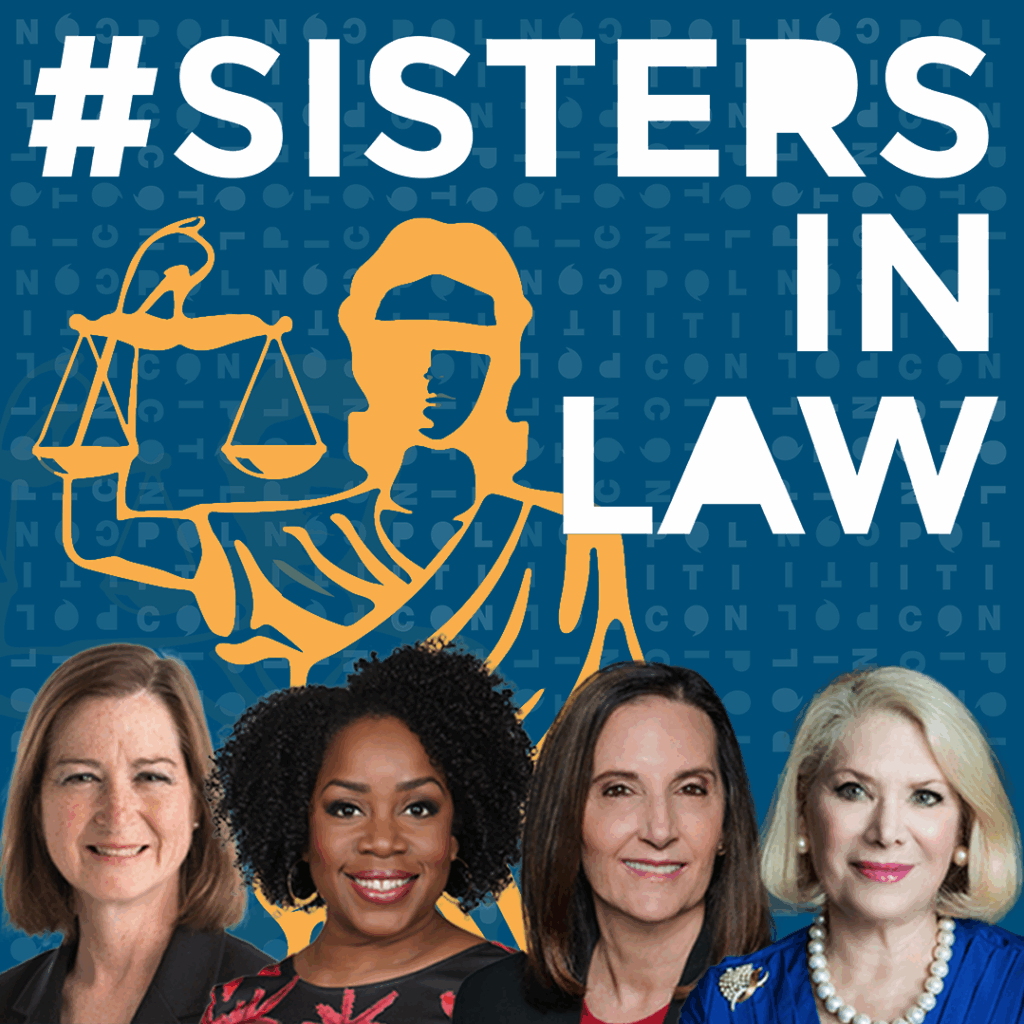
Joyce Vance hosts #SistersInLaw to discuss the legality of government-funded political ads, looking at the difference between public service announcements and partisan propaganda, and how it compromises the ethical use of taxpayer funds. Then, the #Sisters review the legality of the Trump administration’s third-country removal of immigrants, the SCOTUS decision allowing it to continue, and how international law applies. They also examine the docket on the upcoming SCOTUS term, including cases involving gun control, environmental protections, election law, and more.
Remember to send in audio questions to SistersInLaw@politicon.com for the #Sisters to answer on their new companion podcast, SistersInLaw Sidebar! It airs Wednesdays wherever you normally get your podcasts!
Get the brand new ReSIStance T-Shirt, Mini Tote, and other #SistersInLaw gear at politicon.com/merch!
Additional #SistersInLaw Projects
Check out Jill’s Politicon YouTube Show: Just The Facts
Check out Kim’s Newsletter: The Gavel
Joyce’s new book, Giving Up Is Unforgivable, is now available, and for a limited time, you have the exclusive opportunity to order a signed copy here.
Barb is on a book tour! You can also order Barb’s new book, The Fix. Her first book, Attack From Within, is now in paperback.
Add the #Sisters & your other favorite Politicon podcast hosts on Bluesky
Get your #SistersInLaw MERCH at politicon.com/merch
Email: SISTERSINLAW@POLITICON.COM or Thread to @sistersInLaw.podcast
Get text updates from #SistersInLaw and Politicon.
Mentioned By The #Sisters
Trump’s Government Paid For Campaign Ads
Support This Week’s Sponsors
Helix:
Find your perfect mattress with Helix’s Fall Savings Event! Get 20% off sitewide at helixsleep.com/sisters!
ASPCA:
To explore coverage, visit aspcapetinsurance.com/sisters
The ASPCA® is not an insurer and is not engaged in the business of insurance. For terms and conditions, visit: https://www.aspcapetinsurance.com/more-info/state-documents-and-sample-policies/. Products are underwritten by either Independence American Insurance Company (NAIC #26581) or United States Fire Insurance Company (NAIC #21113) and distributed by PTZ Insurance Agency Ltd.
Mint Mobile:
Get premium wireless for just $15 per month at mintmobile.com/sisters
Thrive Causemetics:
Amplify your everyday look this fall. Go to thrivecausemetics.com/sisters for an exclusive offer of 20% off your first order.
Get More From The #SistersInLaw
Joyce Vance: Bluesky | Twitter | University of Alabama Law | Civil Discourse Substack | MSNBC | Author of “Giving Up Is Unforgiveable”
Jill Wine-Banks: Bluesky | Twitter | Facebook | Website | Author of The Watergate Girl: My Fight For Truth & Justice Against A Criminal President | Just The Facts YouTube
Kimberly Atkins Stohr: Bluesky | Twitter | Boston Globe | WBUR | The Gavel Newsletter | Justice By Design Podcast
Barb McQuade: barbaramcquade.com | Bluesky | Twitter | University of Michigan Law | Just Security | MSNBC | Attack From Within: How Disinformation Is Sabotaging America | The Fix
Joyce (00:11)
Welcome back to #SistersInLaw with Jill Wine-Banks, Kimberly Atkins Stohr and me, Joyce Vance. Barb is out this week and we’re gonna miss her, but she’ll be back next week. This week we’ve got a lot planned for you. We’ll talk about the Trump campaign ads that are being run at taxpayer expense, the Supreme Court decision on removing people to countries that they have no ties to, and a little bit of a Supreme Court curtain raiser because it’s that time of year.
But you know, before we get started, I have a question for each of my sisters. I wanna know what’s something that you’ve become unexpectedly opinionated about lately. Kim, do you have something in that category?
Kim (00:55)
Okay, sorry. I forgot to look I’m sorry, that was my bad. I should have done it. I’m like
Joyce (01:00)
You’re in a
Kim (01:05)
I’m expected to have opinions about the things I write.
Joyce (01:08)
So opinionated in our professional lives. I want to know what you’re opinionated about in your personal life. Because I’ve got a big one. Do you want me to start and go here’s
Kim (01:18)
Yes, why don’t you start? Why don’t you start?
Joyce (01:20)
mine? So look, you guys, my husband, all six foot three of that man, he is a cover’s hog in bed. He’s horrible. And so I took us to the Nordic system where we’ve got, you know, we’re still we have a bed, but we’ve got two twin-sized duvets.
And I totally have the duvet to myself now. I sleep a million times better. I don’t get too hot or too cold. And I don’t get woken up every time Bob moves around. But he hates it. He’s so offended by that system. It’s also a lot easier to make the bed in the morning, to be honest. I mean, I am passionate. I will not change my mind. This is how it’s gonna be. Period. So I’m just curious, is it just me? Am I getting old and cranky and ornery, or do y’all have something too?
Kim (02:06)
just in your defense, I think the way we sleep is really important. So that’s an important
Joyce (02:11)
Thank you, sis.
Kim (02:13)
I I I get that. The only the equivalent thing that sort of was the the make or break moment in Greg’s and my marriage was is the toothpaste squeezed in the middle or is it rolled up at the end? I’m a middle squeezer. I have been a middle squeezer.
Joyce (02:33)
That’s an unforgivable sin.
Jill (02:35)
my god. Like how must I’m with Greg on this.
Kim (02:41)
You’re hidden away.
Joyce (02:42)
you a toothpaste key, you know you hook it on at the bottom and it rolls it up perfectly. They’re aw
Kim (02:47)
Actually I gave I gave him one of those as a gift as like a gag gift once just to like you know point out how he’s so and like you know g God help him, he just decided not to talk to me about it. I do find you know, for a while he was just like, Could you squeeze it from the bottom? And I’m like, What? Like it’s like I’m half awake, you know, I’m barely able to see. So you want me to go and like go all the way to the bottom and very curious and how can you even control it if you’re doing it from the end, how do you control like
Whether only a little bit comes out or a whole bunch comes I just squee d I just grab the thing and I squeeze. And he just comes in after me and just turns it up at the bottom. That’s how we saved our marriage.
Joyce (03:28)
It’s a tribute to a marriage when you can compromise on an issue like that.
Jill (03:33)
Okay, so I have a different solution for you, Kim. I will send you a picture of the type of toothpaste we use, which comes in a sort of s bottle. It’s hard to describe. And it solves that problem. It just it’s perfect. I will send you a picture of it. I don’t want to mention the brand online because unless they want to advertise with us, I don’t know. Sorry.
Kim (03:55)
That’s right. No freebies.
Jill (03:57)
No freebies. producer.
I’ll tell you who it is too, you can contact them.
Joyce (04:02)
Y’all are too funny.
Jill (04:04)
I thought you were asking us what we were obsessed with, not what we were opinionated about. I’m opinionated about too many things, but I am currently obsessed with certain Instagram posts. I love and and for those of you who are watching us on YouTube instead of just listening, Kim is wearing a scarf with a ring that she has tied to make her scarf look really special.
And there are videos on how to tie your Pajmina. And they are fantastic. And if you watch them carefully, you can duplicate them and make your Pajmina into like a jacket. It’s amazing. So I’m you know, I used to be obsessed with and am still obsessed with, which means I’m spending all too much time on Instagram, dog videos. And so I mean, who isn’t? That’s the best way to go to bed is watch a few of those lovely dog videos. I saw one recently where a horse saved a Dalmatian who was
Stuck in a river. Now AI
Joyce (05:00)
Okay, but was it a
Jill (05:02)
I don’t know. I don’t know. I don’t want it to be AI, but either.
Kim (05:08)
Stup the dog and run on his back two hind legs back onto land.
Jill (05:12)
He got into the stream and s bent down so that the dog could climb off the log he was on onto his back and then the horse got out on the other side. And
Joyce (05:22)
Yeah, I’m calling AI.
Jill (05:24)
I I it probab well, have has anybody seen Sheldon with a baby where the mother comes over and says, I want my baby. Give me the baby, Sheldon and Sheldon goes, No. So, okay, I know that’s AI. I’m not sure about the dog being saved by the horse. Anyway.
Be very happy. So I’m I’m into Pajmina scarf tying and dog videos.
Joyce (05:48)
Well, I’m gonna mess with your algorithm and start sending you videos. You know, my very good friend Katie Phang and I, we do talk on the phone, but mostly we just send each other dog videos on Instagram all day long. And it’s how I know she’s thinking of me. It warms my heart and I love the dog videos too.
Jill (06:05)
Okay, I’m gonna start sending you mine and you send me yours and Katie’s.
Joyce (06:09)
It’s a deal, Kim YouTube.
Kim (06:11)
All right. I’m in.
Joyce (06:22)
Everyone wants to curl up in a comfy bed, so having the perfect mattress for your sleep habits is a must. Great sleep is critical to success and there’s nothing better for sleep than a Helix mattress. You know, I first heard about Helix when they asked to sponsor our show, but we are very selective here at #SistersInLaw, so we wanted to try them out for ourselves. I took the Helix quiz to tailor my mattress to my sleep style and I got matched with the Helix Midnight Mattress.
I clearly aced that quiz because I’ve been getting the best sleep of my life ever since it arrived. I love my Helix mattress. Tossing and turning is a thing of the past, and my whole family actually ended up with Helix mattresses because everyone loves finding their ultimate fit.
Jill (07:07)
Joyce isn’t the only one. Helix is the most awarded mattress brand by reviewers like Forbes and Wired. They have over 20 different models, and you’ll love how they combine memory foam and individually wrapped steel coils for the optimal blend of softness and support. There are even enhanced cooling features to keep you from getting too warm when the heater is blasting or the sun is blaring on any kind of a night.
Kim (07:34)
I’m amazed that Helix has been a part of my sister’s sleep habits for over two years. Making the Switch is such an upgrade. Since then, we’ve heard so many stories from people seeing amazing improvements in the quality of their sleep on their wearable devices thanks to their Helix mattresses. Add that to free US shipping with seamless delivery that comes direct to your door, a quick and easy setup, and no fuss trial policy, and Helix is an easy choice.
Jill (08:02)
With Helix, you can rest easy with their seamless returns and exchanges. Their Happy with Helix Guarantee offers a risk-free, customer-first experience with a 120-night sleep trial and a limited lifetime warranty to ensure you’re completely satisfied for as long as you have that mattress. So don’t wait. Snuggle up on an incredible mattress this fall and beyond. Take advantage of their fall savings event and go to Helix Sleep.com/slash sisters.
For twenty percent off site wide. That’s Helixsleep.com slash sisters for twenty percent off site wide. Make sure you enter our show name after checkout so they know we sent you. Again, it’s Helix Sleep dot com slash sisters, and you can find the link in our show notes.
Want to have a open debate and discussion with you guys today to answer the question that is now being posed about whether the new ads that the government is paying for, i.e., that is you, me, and everyone listening, all taxpayers are paying for certain ads that to me look completely political partisan ads. but which the president is saying, no, they’re not. They, they, they’re public service announcements.
the the ads include one that was a campaign ad for Trump in the last election. And at that time, of course, he paid for it, not the government. So it was only repurposed and charged to us. I want to talk to you about whether the ads are legal. What do you think, Joyce? And then Kim, just give me your top line. Legal, not legal.
Joyce (10:00)
I mean, there’s not much to debate here. If you feel like you’re living in a world with big brother, then it’s illegal, it’s a political ad. End of story.
Kim (10:09)
Yeah, I would say not only is it illegal, but it also is very, very anti democratic. I mean, this is what autocracy looks like, y’all. It’s the government putting out this messaging propaganda that’s meant to prop itself up. and your taxpayers, your taxpayer money is being used to do it. I mean, there’s just never been anything like it before, but it’s yet just another
another element of our government that this administration is smashing.
Joyce (10:45)
And it doesn’t matter if Trump is a candidate or not, right? I mean, this is just self aggrandizement, which the law prohibits. I mean, that’s why I say big brother. I mean, it’s just so Donald Trump, love me, love me. For those of you who’ve not seen the ads, you know, that’s the soundtrack that plays behind one of them. Right. there’s a deep state final battle message and and one as you pointed out, Jill, is just identical to the twenty twenty four presidential campaign ads. So not much room for debate here.
Jill (11:15)
In in case people haven’t seen it, as you just mentioned, they might not have, I’m gonna post a link in our show notes so that they can get access to them and see for themselves. but I d and I do wanna dive into some of them legal issues because one of the questions is, you know, what laws exist that might make this illegal? And one of them is you can’t use government money for propaganda. I mean propaganda is what
1984 is about, the book that is. and that’s what is happening in North Korea and in other dictatorships. So we have to look at is it propaganda or is it, as Donald Trump says, is it possibly a PSA, a public service announcement? It doesn’t seem to me it could possibly be public service because it’s not announcing anything to protect the public from some harm.
to announce a new government program on how to take advantage of the advantages. But so I w I wanna know what you think about the claim. You know, is it possibly not propaganda or is this clear propaganda?
Kim (12:23)
well, it is it looks like propaganda to me, but let’s look what the law says. So again, this is taxpayer money and that has to be put through through the appropriations process, which is every year Congress passes an appropriations bill which pays for everything that’s going on in the government. And in the language of each one of those appropriation bills is a prohibition against the use
of public funds for unauthorized domestic quote publicity or propaganda. And federal regulations interpret that to include self-aggrandizement, check. It’s basic these ads are basically just President Trump with a voiceover talking about how great President Trump is. another category is covert propaganda, which is communications meant to just bolster
a a government agency as opposed to give Americans information the same way, just as Jill explained. And the other is purely partisan. Now, the timing of this right before the midterms seems to me like this is a political message. It’s aimed at seeing that the the the polling for Republicans right now is going through the floor.
And they’re trying to bring back a message that, hey, it worked in twenty twenty four, let’s see if it works again in twenty twenty-six. I it seems to me to clearly violate the appropriations prohibition against this kind of stuff. There are also other federal laws that prevent p the hiring of publicity firms to with public money. So clearly some firm put this together I mean, the the White House didn’t cut and paste this on, you know.
They they don’t even have a communications direct or they don’t even have a press secretary right now. So it’s not like this was done in house. This was clearly done with the help. And and as Joyce pointed out, one of these was made by a communications firm for a campaign. So it seems to violate that act. There’s also the Hatch Act, remember that? Remember when we used to enforce it? That prohibited political office holders from from campaigning on government time. you know, th
There are a lot of laws in place. It’s not a lack of laws that’s the problem here. It’s the lack of any enforcement mechanism against it. So Trump just keeps doing what he does until forced to stop and nobody’s forcing him to stop this yet.
Jill (14:49)
And and let me just clarify that under the Hatch Act, if any government employee, other than the president, because he’s exempt from the Hatch Act, something we ought to consider and decide whether he should be, but for now he’s exempt, but his staff isn’t. And if any one of them worked on this, that’s a clear violation of the Hatch Act. Yes. there’s also a law five USC thirty one seven that applies here. And all of those combine
to present problems. But on Tuesday of this week, Public Citizen filed a lawsuit and said that this was a thinly veiled campaign ad that was now being paid for by the city by the by the federal government. And so they want to stop this. They said, and I’m gonna quote them, federal law explicitly prohibits using appropriated public funds for government propaganda
Self-aggrandizement or partisan political advertising. Yet that is exactly the nature of Trump’s recent campaign ads. And they add that none of the ads to date meet the standard of a public service announcement. They don’t refer to any government program, etc. So let’s talk about that in more detail. And you know, Joyce, what do you want to say about that?
Joyce (16:09)
Think that that appropriations law theory is the better theory to the extent that anything can be done here. Cause Kim is making, I think, the correct point. we don’t have a shortage of laws. We just have an administration that doesn’t believe in enforcing them. And you know, there’s no such thing as taxpayer standing. So we the taxpayers can’t go out to sue and enforce this. In fact
I’ve been speculating this week, but haven’t been able to lure any of my academic colleagues into a discussion of whether or not this situation suggests that there should be taxpayers standing in certain very limited cases to challenge impropriety by an administration. I I still think that that appropriations theory about spending that the lawsuit is based in is the better theory. You know, you also raise the Hatch Act, and that I think is a secondary, it’s a much more complicated.
Theory. Trump, for one thing, is exempt from the Hatch Act restrictions because he’s the president. Federal employees who produced or approved or were involved in the supply chain on the ads, they’re not necessarily exempt. The Act could prohibit their conduct, but you know, ever since Kellyanne Conway during the first Trump administration got away with blatant Hatch Act violations with absolutely no accountability, it’s been this
Clear that this administration, unlike prior administrations, doesn’t give a flip about the Hatch Act, won’t won’t deal with anybody, hold anybody accountable for violating it. In fact, they encourage their employees to violate it like they did here. So the reality is with Trump not on the ballot, which gives them this sort of, you know, hook to hang their hat on to say that it’s not campaign related. I just don’t think the Hatch Act theory flies at all.
Jill (17:59)
Besides anything that they do that is deemed indictable in the next administration, because clearly this administration won’t take any action, they will be preemptively pardoned. And so what difference does it make? We need some new laws. And, you know, Barb just wrote a book called The Fix. I hope she addresses this. And if not, maybe next week she’ll fill us in on what she thinks the law should be so that we don’t have to pay for these kind of ads.
That offend my eyes and ears to see and hear.
Kim (18:42)
Y’all, guess what? I’m allergic to Snickers.
Joyce (18:45)
No, are you serious?
Kim (18:47)
I went to yeah, so I went to the allergist really because my seasonal allergies are just so bad. I mean, they’re making me miserable and I thought they were getting worse, which they are. I’m allergic to everything that grows outside, basically. But they also did you know, animals, cats, dogs, and I already knew I was allergic to cats, but I am now, according to the test, just as allergic to dogs as I am to kids. Wow. And do you know what my allergist said to me? She suggested.
That Snickers not sleep in our bedroom.
Joyce (19:20)
You
know what? That’s just a non starter.
Kim (19:23)
Yeah, I told her, you know what? Bark that. I will just take antihistamines. I will just take an I will do anything for my dog, including
Joyce (19:36)
I mean, I have had allergy shots for years. I’m really allergic to cats and dogs, probably to chickens too. But you know, life’s too short.
Jill (19:46)
Today’s episode is sponsored by the ASPCA Pet Health Insurance Program. If you’ve ever found yourself awake at 2 a.m., phone in hand, Googling things like, is this normal for dogs, or do I need to call the vet right now? You’re not alone. Those unexpected moments are part of having a pet, which is exactly why ASPCA Pet Health Insurance exists. It helps take some of the financial stress out of veterinary care so that you can focus more on your pet.
And less on the cost.
Kim (20:16)
The ASPCA Pet Health Insurance Program offers customizable accident and illness plans that can fit your budget, your lifestyle, and even your pet’s particular quirks. Because let’s be honest, vet bills can add up fast. You need someone you can trust. And ASPCA Pet Health Insurance has been around for almost 30 years and has covered over 1 million pets. And when it’s time to submit a claim, it’s easy.
Just use their app and receive reimbursement for eligible vet bills directly into your bank account so you can go back to focusing on what really matters: your pet.
Joyce (20:53)
You know, our daughter has a gorgeous main coon cat who we love, Marty. He’s Marty wants on Instagram because he eats absolutely everything, which is a little bit weird because he doesn’t have any teeth. Ellie rescued him, he’s a foster phale. and he had some and like she adopts him knowing that he has I think it’s stom I’m gonna kill the name, so please don’t laugh at me, stomatosis or something like that.
He ended up having to have all of his teeth pulled. It was incredibly expensive. He has repeat medical emergencies. But Eleanor has ASPCA, and it is a lifesaver. I mean, we were so impressed when we realized that the amount of money she was hitting us up for to help out with her cat was so modest compared to what he was being done. And it’s because she’s got this great insurance. So to explore coverage, you can visit ASPCA petinsurance.com.
You know, I should say Ellie had that insurance before we started doing the ads. And sort of in the context of doing the ads, I was like, wow, she has the insurance we’re advertising, and it’s really fabulous. So that’s ASPCA petinsurance.com slash sisters. Aspca petinsurance.com slash sisters, and the link is in our show notes. This is a paid advertisement. Insurance is underwritten by either Independence American Insurance Company.
or United States Fire Insurance Company and produced by PTZ Insurance Agency Ltd. The ASPCA is not an insurer and is not engaged in the business of insurance.
Kim (22:38)
So it wouldn’t be a week without another Trump draconian cruel policy being in the news. And this one was no different, with the Supreme Court temporarily at least allowing Donald Trump and his administration to continue to resume deporting people, non non-citizens, to third-party countries where they have no connection, where they are not citizens, where they have no family, no work.
no connection at all, may not even speak the language. and they’re doing this all while not giving them a meaningful opportunity to go before a court and challenge the removal as something that should not be done. It was a 6-3 decision by the Supreme Court, which lifted an injunction that lower courts had put into place stopping this policy from going into effect without giving
those who are facing removal the opportunity to challenge it in court. It wouldn’t stop it entirely. but that was still enough for the Supreme Court to say no, the government would be irreparably harmed by stopping this from going forward. At the very least, they did agree to hear the case on the merits on the docket this term. But I mean, this news really, really sort of just hit me in the gut, Jill. So
Explain to us little bit about the law around third country removal. So I think a lot of Americans probably didn’t even realize that this could happen. They’re not illegal and and they’ve happened under the administration of both parties. But since February twenty twenty five, Donald Trump has turned it up a lot. So what are the laws governing this kind of removal?
Jill (24:24)
So you’re right, this is something that is allowed in certain circumstances. And you know, we discussed this topic last week. Unfortunately, it was before the Supreme Court did what it did to allow this to continue, which is in my mind, as is yours, completely despicable and brings to mind that cruelty is the whole thing. That’s what this is all about. the administration is cruel.
And I’m happy to say that and I don’t care who hears it. the law is something that has allowed this for a long time and it has been used on occasion. The number of third party removals has increased so dramatically recently that it puts it in a different category in my mind. You cannot compare any prior use of third party removals. And we have to look at what that means.
It means normally if you are deemed to be deportable because you came here illegally and that you’ve had due process, and let’s not skip that part, you have to have had notice and a hearing and a chance to contest it. And in the case of third party or third country removals, you have to be able to show that you won’t be tortured there. You have to show that you couldn’t be deported to your own home country because you might be tortured or subject to some penalty there.
You fled that country for a reason, and so you can’t go back there. So they try to find another country where you have some connection, where you speak the language, where you have family, where there’s some reason that you could live there in a reasonably safe and comfortable fashion. But no, they’re now sending people to Sudan and to other war-torn nations and to countries like, well.
How about the Seacot prison in El Salvador, where people were subject to torture and to inhuman conditions? And we’re also finding out that people are being deported back to their original home country, violating the rule that they can’t be deported there to begin with, because they go to this third country. And then the third country, which is motivated solely by money, because they’re getting paid to take these people. That’s why they’re taking them. We’re spending a huge amount of money.
millions and millions of dollars. One, to fly them to these places on military planes instead of on the available charter flights that would cost much less and would not take our military away from their other duties and paying these countries to take them, but they’re not keeping them. They’re now forwarding them in violation of international law. I think it’s called refoulement, that they are being sent to these third countries. They’re being sent from their
back to their home country where we could not originally send them. So it’s it’s like a violation of a violation and a violation on top of that. It is really wrong in every single way.
Kim (27:31)
And that’s not to mention that under the law that exists, the preference of the person yes being removed is supposed to take precedent. There’s if you if they can’t say, for example, their country, their home country will not accept them, right? Or as you pointed out, it’s dangerous. They’re supposed to say where they would otherwise be able to go so that they can they can be safe and and have some sort of connection.
Jill (27:54)
After their own home country, they get to pick one. And then if for some reason they can’t go there, they then the government can, after notice and hearing, can pick a third country. But they get to have a say on that.
Kim (28:09)
Right. So Joyce, explain the lower courts. So the lower lower courts in Massachusetts and elsewhere said no no to what Donald Trump was doing, this ramp up, this sped up due process, free process that the Trump administration set up, Joyce. What did the lower court say about it?
Joyce (28:25)
Yeah, I mean it’s a little bit ironic because you have to keep in mind that they’re working off of what the Supreme Court had said earlier, not what it just said, the new ruling that we’re we’re discussing. But let me read a little bit from Judge Murphy’s opinion, which I think clarifies the question that you’re asking. He writes Defendants argue that the United States may send a deportable alien to a country not of their origin, not where an immigration judge has ordered.
Where they may be immediately tortured and killed without providing that person any opportunity to tell the deporting authorities that they face grave danger or death because of such a deportation. The defendants that they’re talking about are the Trump administration, and that’s what they’re doing. They’re sending people into war-torn countries, knowing that they’ll be tortured. Some of them, in fact, have reportedly been with solid documentary evidence. And then Judge Murphy continues. He says,
All nine sitting justices of the Supreme Court of the United States, the Assistant Solicitor General of the United States, Congress, Common Sense, Basic Decency, and this court all disagree. Disagree with that idea that people can be sent to places where they’ll face torture. And so he makes this across the board argument that just says, this is wrong, it’s illegal, but more importantly, it’s wrong.
The bottom line in the lower courts has been that you can’t send people somewhere where they face torture and death without due process. At least some minimal due process, right? It’s not saying that you can’t send them ultimately, but they have to have notice and an opportunity to be heard about the danger that they’ll face first.
Jill (30:06)
Well, international law does bar sending people to places where they will be tortured. There is a convention against torture.
Kim (30:12)
Yeah.
It it is right. But
Joyce (30:15)
Country,
but not South Sudan, right?
Kim (30:18)
But
it’s I think the point that Joyce is making is an important one. The lower court, Judge Murphy and the First Circuit did not say you can’t send them. Yeah. It said all they said was they need to be given due process. And the Supreme Court lifted that and said, No, we’ll take this case up, but in the meantime, keep going. Like, do your best, Trump administration. And and if you want to know like what reasoning the Supreme Court gave for
For granting that stay, ha ha, so do we, because they didn’t give one because it was just a short little unsigned order. So, Joyce, why do you think the Supreme Court, at the very least, took this off the shadow docket? Because they could have just done that. They could have just lifted the stay and walked away and let the shadow docket do this, do its thing. But they put it on the docket to have arguments, which means at some point they’ll issue an opinion. Why do you think they took that route?
Joyce (31:11)
I mean, look, we we spend a lot of time trying to get into the heads of Supreme Court justices and we all realize that that’s not a profitable exercise. But it is really bizarre that people who profess to be good Christians are willing to send other people in to face torture and murder. I just don’t think that they could have indefinitely lifted the stay and still maintain that they were good, decent people. And so this case was always gonna be headed for a
full hearing, for full briefing, for full argument. I but look, I mean, I I can’t give them any high marks for doing it, Kim. I’m glad the court will hear the case. The fact that they will continue to deport people into deplorable, dangerous conditions for a period of at least a couple of months, it’ll take the court presumably some time after the case is argued and briefed, to rule. So that that whole factual scenario I find to be incredibly distasteful.
You know, you’re asking why they did it. I suspect that the answer is this: that there weren’t enough justices to wr write a majority opinion firmly one way or the other, right? There wasn’t a realistic possibility of resolving this off of the shadow docket without full briefing. And and so perhaps this is one of those cases where the majority is still shifting, and maybe there’s some hope.
that after the December hearing the court will actually do the right thing, but it’s gonna be too late for all of the people that this administration deports between when they started doing this and whenever the court rules.
Kim (32:49)
See, I’m not as I’m not as I don’t know, maybe I have a a a less forgiving take on the Supreme Court than you do, Joyce, because I think we there absolutely is a six three vote right now to uphold
Joyce (33:00)
I’m really hoping that Amy Coney Barrett just can’t look herself in the mirror if she does.
Kim (33:06)
There’s
at least I think there’s probably six, three. I think there’s definitely at least five, four. I think they have the majority. But what I think probably happened was if they were sh gonna try to do this on the shadow docket, one of the justices in the minority, maybe Justice Jackson, was gonna read them for absolute filth in a dissent in a way that allowed somebody to craft a deal saying, Okay, what what if we put it on for argument? What if we put it on for argument? We’ll lift the stay and then you can have your say.
And and it at least there’ll be an opinion. I think somebody was reading them for filth for trying to do this without explaining themselves. I think that’s it. I mean I think we already know the outcome. But rem
Jill (33:39)
Remember remember that in the meantime people are being deported to countries the State Department has said no US citizen should visit, it’s too dangerous.
Kim (33:48)
Even
visit, let alone live. Twenty-five thousand people have already been removed to third countries since February of twenty twenty five when Trump started turning up just basically just shipping people out in this way. I mean, I saw a report with somebody and many of these countries are in Central Africa and they’re sending people who are from like, you know, the either from Mexico or the or the, you know, Egypt or someplace else there. And one of the detainees in a in a
horrible Los Angeles Times story was kept asking, where are you sending me? Where are you sending me? As they were taking them off the bus and putting them on the military plane because they said, I’d rather die than go to Africa. Because this is somebody who had never been there, didn’t know anything.
Joyce (34:33)
Speak the
Kim (34:34)
Doesn’t speak the language, it would basically be like putting them on Mars. And it it’s just so cruel. I don’t know how this can’t be decided on Eighth Amendment grounds because this is
Horrifically cruel. I mean, people make this argument that, they broke the law and how they either, you know, came here illegally or stayed illegally. I’m sorry, that’s not the punishment for anything. And not to mention the fact that removal is a civil action, not a criminal punishment. But there is nothing in the law that justifies this type of cruelty. And the Supreme Court, by letting this go forward, in my opinion, signed off on that cruelty. So this is on them every bit as much as it’s on the administration.
Joyce (35:13)
So, you know, Kim, you point out that I’m more optimistic about the court than you are on this one. And that’s we’re usually out on the ledge together. But let me tell you why I’m not optimistic, but I do think that there’s a chance this one could come out the right way. Something happened last week that I thought was very interesting. Sam Alita recused in a case because he had a financial conflict of interests.
And he had steadfastly refused to do that until he was subjected to a lot of public pressure. This is the kind of case that I think will draw a lot of public attention. I’m hoping much of it will come from religious groups that will decry what the government is doing. And you know, if you’re Brett Kavanaugh, if you’re Amy Coney Barrett, you’re on this court because Donald Trump put you there, but you profess to have deep religious beliefs and you’re gonna outsurvive Donald Trump by
two, three, four decades. I’m hoping that they will think about their legacy, their future, their reputations, and that they will decide that being inhuman, acting like Nazis, is a bridge too far and they’re not willing to stand on that bridge with Donald Trump. So I don’t think that it’s optimism. In some way it’s I I don’t even know what the right word for it is, utter disgust. But I you know I’m I’m just hoping that these two have an ounce of self preservation at their core.
Kim (36:35)
Here’s hoping.
You know, sometimes I miss being a kid because there there wasn’t that much responsibility. You know, I didn’t have a job, I didn’t have to do much, you know. I I wish I could experience that kind of freedom as an adult, but there’s one way that you can experience that sense of freedom, and that’s by ditching your expensive mobile service thanks to Mint Mobile Sale. Right now, all of Mint’s plans are fifteen dollars per month.
Even unlimited. So free yourself from big wireless and their gimmick and gotchas and switch to mint for high speed data and coverage on the T-Mobile 5G network.
Joyce (37:25)
The website is simple to navigate, so you can get down to business in no time. Price and service both great, so it works if you want to have your kids and other family members using it too. This is a great deal for people who have more important things to spend their money on than their mobile plans.
Jill (37:42)
Mint Mobile took what’s wrong with wireless and made it right with premium wireless for fifteen bucks a month. All plans come with high speed data and unlimited talk and text delivered on the nation’s largest 5G network. And you can bring your current phone and your number. Choose from three, six, or twelve month plans and say goodbye to a monthly bill.
Kim (38:06)
It’s the best deal out there. So ditch overpriced wireless with Mint Mobile. It’s so easy. Sign up online and get three months of premium wireless service for fifteen bucks a month. To get your new wireless plan for just fifteen bucks a month, go to mintmobile.com slash sisters. That’s mintmobile.com slash sisters. Cut your wireless bill to fifteen bucks a month at mintmobile.com slash sisters. That’s it. There’s no catch.
And the link is in our show notes. Upfront payment of $45 for three months, $90 for six months, or $180 for 12 months. Plan required, $15 per month equivalent. Taxes and fees extra. Initial plan term only. Greater than 50 gigabytes may slow when the network is busy. Includes up to 20 gigabytes hotspot capable device required. Availability, speed, and coverage varies. See Mipmobile.com.
Joyce (39:13)
So y’all, it is that time of year. The first Monday in October is upon us, and that means, glory, the new Supreme Court term is formally about to begin. look, we’ve always enjoyed doing a curtain raiser and talking about some of the big cases we’ll be discussing soon. This year it’s just not a happy event. It’s like, please, Supreme Court, stay out of session, give us a couple extra months, but really
All summer it’s felt like they were still in in session with the shadow docket cases, so no no rest for the weary. But let’s get started. There there are a lot of cases we’ll talk about this year. I thought today we’d each pick one case for the upcoming term to focus on to get our our listeners and our viewers a head start on the court. Kim, why don’t you start?
Kim (40:01)
Yeah, so I think one of the biggest ones of the term will definitely be the Second Amendment case asking whether there is a Second Amendment right to possess AR-15 rifles and other high power style weapons. We should have seen this coming, you know. it it really started back in 2008 with the Heller decision, which created this individual right to bear arms.
and it struck down a DC handgun ban. And the rationale then by Justice Galia was people have the right to bear arms and for their self-protection. Yeah, it was it was kind of interesting how they just ignored that whole militia part that begins the Second Amendment and just made it about, the right to protect yourself. Yeah, that’s what the Second Amendment’s about. And then but but then since 2022 when you had this conservative supermajority
Bent on doing a lot more, bent on doing the most, we got the Bruin decision, which extended that outside of the home. So basically anywhere people have this Second Amendment right to carry firearms. So the right to be armed in in your home, outside of your home, that’s already been said. So it was almost logical that the next step would be: okay, well, what kind of gun can you have?
And now here we are back again with the Supreme Court after Justice Kavanaugh, in a in a statement joined by Justice Gorsuch last term when they turned a similar case away, said we need to we need to decide this AR-15 issue soon. And here it is on the docket this year. So basically, what the proponents of this view that AR-15s are protected by the Second Amendment are saying is that under the Heller standard,
guns that are common, quote unquote common in common use, cannot be banned. And their rationale was that handguns are so common. It’s the number one way that people have a firearm to take care of them. They’re handguns. You can’t ban those. Well, now because there are 30 million AR-15s owned by civilians, I don’t think I realized that number until the pleadings in this case, that that makes them common. And therefore it is something that everyone has the right to. They’re popular.
They’re just so popular. We live in a gun culture that’s so out of whack that these things have become so popular. So by extension of that, they should get constitutional protection, right? Whereas the states that are trying to regulate them and ban them are saying, no, they should be considered unusually dangerous. And just like we can pass laws barring, I don’t know, people
from having you know, dynamite in their homes. We can also pass laws keeping people from having these extremely dangerous weapons of war in their homes or on the street. So I I think I already know how the Supreme Court’s gonna go, but these arguments are just really wild the way they continue to bend and contort the constitution.
Joyce (43:06)
You know, it’s amazing that you raise the dynamite example. I I agree with you. This is this is an important case, but it’s a foregone conclusion. We know that there are five votes there. But let me just be nerdy for a second. as a former arson and bomb prosecutor, I used to do guns and arson and bombs and work with ATF a lot. One of the nerdy things that I know is that the United States criminal code defines firearms to include explosive devices.
And so actually when you start saying that it’s legal to have popular guns, you would by extension end up with, you know, IEDs, bottle bombs, stuff that’s like clearly illegal right now. I
Kim (43:50)
Tolder launchers.
Joyce (43:51)
well, I mean, you know, it’s like, and why not crack cocaine? Crack cocaine’s popular too in some places. This is such a Barb’s not here, so I’ll say it. It’s such a BS standard, right?
And this is just like this is coming at us from the court that the originalist court that wants to talk about AR fifteen’s when all that was around when the Second Amendment was created were a bunch of muskets. They skip over the militia provision. Right. Yeah.
Kim (44:18)
Load it back.
Joyce (44:20)
They skip over the militia provision and then they look at us with their prune faces like there’s something wrong with us for wanting to ban weapons that mean
Every time you send your kids off to school you have to live in fear until they come home to you.
Kim (44:34)
I know I know we’re short on time, but you you mentioned the militia. There’s one amicus brief by the Cato Institute that actually makes the militia argument. It’s saying, well, it’s a weapon of war. And under the Second Amendment, you know, a militia needing to be necessary to protect a free state, you gotta let people, civilians, have weapons of war. I’m like, what? Like do you think?
Joyce (44:57)
If I had a rocket launcher, right? Yes. All right. Let’s leave guns behind before Kim and I explode. Jill, did you want to talk about Suncor a little bit?
Jill (45:06)
I wanted to talk about it a lot. And I love this segment because I remember last year the cases we picked and they all turned out to be really important. I had picked slaughter and what it meant for federal. Yeah. I mean, it turned out to be a lot about executive power. Yeah, I picked Suncor, and and we’ve actually already mentioned it without mentioning the name, because we mentioned that Alito had recused in a rare episode. He had actually recused himself, and it’s in this case
Because he actually owns stock in companies that will be impacted by the decision. So he obviously had a lot of public pressure that forced him to recuse. And thinking ahead, of course, this could mean a 4-4 decision, which would let the California Colorado case stay in effect. So it’s sort of an interesting thing. But so let’s talk about what the case is about. And it’s about our environment.
It’s about climate change. It’s about whether we are all going to die because of what’s happening with emissions. And I I want to point out on a bigger issue, it is possible that this case could be the way around the federal government dropping all protections. I mean, they are, emissions, we don’t care. We’re not going to enforce any of those emission standards. Well, maybe the states can save us. And so the
Arguments and and by the way, this will be argued on the first day of the new session. So we’re going to know pretty soon how the arguments in the case go. And I I hope we’ll have time to cover it when we actually hear them. But but for now, I want to say that it it started in 2018, this case was filed. So we’re already like at eight years into this case, and it’s just now getting to the Supreme Court. and
We still don’t have a decision. We don’t know when we’ll have a decision exactly. and the court must decide first if this is within their jurisdiction to even hear the case. So it’s possible they’ll punt and not even take the case up and prolong the agony even more. there are some very interesting arguments on whether or not it’s within their original jurisdiction or not, whether they can hear the case. and so that’ll be the first argument. The the
Companies are saying, look, the states don’t have any right to regulate us. And that’s what this is. Only the federal government under the EPA can regulate us. And the states are saying, We’re not regulating you. We’re suing you for the damage you’re doing because you did this. So it has nothing to do with we’re not regulating you. We’re just gonna recover the damage that we as a state and that our citizens have suffered because of your emissions. And the pollution being from
Outside our state borders, that’s one of the arguments the companies are making, saying, well, you know, you can’t do it because it’s interstate and therefore it’s reserved to the federal government. And the the states, the this Colorado, that is, who’s arguing against us, say, no, this is danger in our state. We’re protecting our citizens. We have the right to control this. and they also note that the EPA is no longer doing anything to protect anyone.
And so that this makes it incumbent on the states to be able to do it. then this the companies are arguing, Suncor is arguing that federal law has preempted any right of a state to bring it. And they’re again claiming the EPA and the Constitution bar it going to the states to enforce because they say the EPA was a s f a federal statute that says this is how we will regulate any kind of pollution.
And because it’s interstate, no state can pass anything that would hurt other states. And so that’s, you know, it’s a complicated argument. We’ll see how it goes. I think obviously I I think the outcome should be that this case should proceed. I also think that we need a new government so that the EPA is actually enforced and that we go back. I mean, Biden administration rules have been obliterated, and we are much more in danger
in terms of what’s happening in our country because of those those changes. So we need the EPA back to enforcing it. And I would point out EPA was created by Richard Nixon, if you could believe that. So it’s been around for a long time and it was a bipartisan idea. No
Joyce (49:47)
Fact. Fun fact, Justice Gorsuch’s mom was the EPA administrator at one point. not a big fan of of that entity though, is he? Correct.
Kim (49:57)
Doesn’t it?
Joyce (49:59)
Well, yeah, that’s the truth. she had a little bit of trouble. does anybody think that Justice Alita would have recused if he wasn’t confident that there were five votes?
Kim (50:10)
Actually no, I think I think I think that I think you’re right. I think the shame got to him on this one. Because
Joyce (50:14)
You think that’s
Kim (50:15)
he was because he did it before. There was another case that involved ’cause he has made so much money from oil refinement, like as much as two million dollars from oil extraction and refinement. And so this came up before and he recused then too.
Joyce (50:26)
It’s very telling that he’s not willing to divest from that stock so he could sit on the cases, right? anyhow, yeah, I just recall one time when my father-in-law was on the eleventh circuit, he realized that there was a case and he owned some stock that was tangentially available. He recused and he sold the stock. but anyhow, what whatever.
One last case to flag for everybody. This one is RNC versus Mia Familia Voda et al. And et al. at the end of a court case or at the beginning of it means and a whole bunch of other defendants. So this case started out with Mia Familia Voda and others suing the RNC. Now the RNC is appealing a lower court decision. This case doesn’t get argued until December 8th, but it’s important to talk about now. There are two issues. They both impact election law.
The first issue is how far states can go and requiring documentary proof of citizenship before people can register to vote, and whether federal law restricts the state’s ability to purge voter rolls close to an election, that’s the second issue. So there’s issues about can you register without proving you’re a citizen? And yes, it sounds so reasonable to require proof, but remember a lot of people don’t have a passport, don’t have a driver’s license.
Many older people don’t have them. A lot of students don’t keep it with them, so they don’t have it when they need to register.
Kim (51:51)
Many people register by mail, like where you
Joyce (51:53)
Becomes
a real way to tamp down on on registration. And Kim, you make an excellent point, right? Which is it changes the way people can register. If you’ve got to show documentary evidence to the registrar, online voting, these sort of church-led voter registration drives, that’s all out the window. but the second issue is really an important one too, involving, you know, how close to the election can states purge?
Let me just give you a little bit of context because the citizenship one is super interesting. There’s already precedents that says that states can’t force voters to provide physical proof of citizenship if they’re using federal voter registration forms. So Arizona comes up with a workaround. They create this dual track system where voters without physical proof are registered as federal-only voters.
And and then the RNC and Arizona lawmakers, they argue that the state has the ultimate authority to dictate rules for its own state forms, even when they apply to federal elections. So the question to listen for when this case is argued is the court’s consideration of whether the National Voter Registration Act, that’s called the Motor Voter Act, or an existing federal consent decree in Arizona, whether either of those prohibit Arizona from requiring
Requiring voter applicants to offer proof of documentary proof of citizenship, birth certificate, passport, when they register to vote using a state registration form. It’s sort of a nuanced question, but Arizona is trying to get around federal law. And then equally important is this other Motor Vote Voter Act question about whether the Motor Voter Act prohibits Arizona.
From implementing a program to remove individuals who are suspected of being non-citizens from voter registration rules closer than 90 days to a federal election. That’s that safe harbor period where there can’t be these large-scale you know, hygienic cleansing of the voter rules, where people are removed from active voter status. If you’re an active voter on day 89, they can’t change that. But Republicans have been trying to say,
But there’s an exception for non-citizens and we can take them all off. And and y’all, again, that might sound reasonable until you consider how bad this administration is at making those assessments. Nevada is a great example where they originally went to the Secretary of State and said, you’ve got tens of thousands of non-citizens on your voter rolls. And Nevada pushed back and asked for more information. So DHS said that there was a more modest number, about 1,600, I think.
And again, Nevada pushed back and they said, you know, we’ve checked your list. Not a single one of those people is a non-citizen voter. They are all American citizens, federal government. So the idea that so close to the election, this administration acting through states that are that are keen on its goals would start booting people from the voter rules is an absolute abomination. But I’ve got to tell you, I am not optimistic about the outcome of this case either.
So that’s a pretty gloomy prognosis that we’re offering. but there we have it. The new term of court starts in the coming week and we’ll be talking about the Supreme Court a whole lot from here on out.
Kim (55:27)
You know, if you ever look in my handbag, heaven help you, because I have everything in there. I always have notes, I have probably some candy, two phones, hand sanitizer, portable power. I I really live out of my bag because I carry everything that I need with me, including when I need to touch my face up for a TV hit or just when I’m just out and about and wanting to look my best. And that includes Thrive.
Cosmetics. When I have a big day, one of my favorite tools to meet the needs of the moment is their incredible arsenal of outstanding products. And recently, that meant the Focus Eyeshadow Palette. Its mirror always comes in handy, especially when it comes with the tools to make my eyes match my mood, my energy, and the moment.
Joyce (56:17)
Yeah, I really love it too, and the palette goes perfectly with Thrive’s Brilliant Eye Brightener, which keeps you bright-eyed and confident no matter how your day unfolds. That has become my go-to combo for appearing live on TV. it it’s really great and it’s something wonderful to try because a total refresh can be as simple as amplifying your looks with clean beauty from Thrive Cosmetics. Every product is 100% vegan, cruelty-free.
And made with clean, skin-loving ingredients that work with your skin, not against it. We know you’ll be a huge fan too once you try it.
Jill (56:53)
I’m with you. I love everything Thrive. Their mascara, their eyebrow tint, their eye highlighter, and now their lasting mark lip defining stain for a sculpted lip that is made to last. It’s a two in one smudgeproof lip liner and ultra pigmented stain that comes in five buildable shades. No matter what look you choose, it delivers weightless, breathable color that feels like bare lips, only better when it
Use it to line and define or to give yourself all over color that won’t bleed, feather, or settle into fine lines. This stain hydrates your lips instead of driving them out for comfortable color that lasts all day long.
Joyce (57:37)
For every product purchase, Thrive Cosmetics donates products and funds to help communities thrive. So far, they’ve given over $185 million in product and cash donations to 700-plus giving partners. Imagine making a difference in things like education, the fight against cancer, stopping domestic abuse, and more with every purchase. That’s beauty with a purpose. So don’t wait, get your new everyday favorites with 20% off your first order at
Thrivecosmetics dot com slash sisters. That’s Thrive Cosmetics C A U S E E T I C S dot com slash sisters. The link is in our show notes.
This is our favorite part of the show. It’s where we take your questions. But we can’t take your questions if you don’t send them in. So if you’ve got a question for us, please email sisters in law at politicon.com or you can tag us on social media using #SistersInLaw. And if we don’t get to your questions during the Saturday show, we’ll try to answer them during our new show, Sisters Sidebar, every Wednesday.
This week we’ve got some really great questions, but the first one is Chef’s Kiss. So we’re gonna start with a question for Jill. This is the question everybody’s been waiting for. Jill, it comes from John in Sea Ranch, California, but it really comes from all of us. John writes, I was just reading a Wall Street Journal article about how the Trump DOJ is reviewing whether Nixon was treated unfairly by prosecutors. Is it
Possible that anything will come of this, or is it just MAGA revisionism? And then John adds, You didn’t treat him unfairly, did you, Jill?
Jill (59:30)
Do I look like someone who would treat anyone unfairly? Really? No. No. the facts and the evidence, the law were all complied with. this comes from Jeff Shepherd, a revisionist historian who was a low level White House lawyer during Watergate. I never met him at the time. I did encounter him on a C SPAN.
At the the weekend of the 50th anniversary of the Senate Watergate hearings, and I’m wearing my 50th anniversary pin. For those of you who are watching on YouTube, you can see my pin. I’ve also posted it on social media so you can see the 50th anniversary Watergate pin. I at the time was totally dumbfounded because I didn’t know who he was and was completely surprised by his take on the Watergate case. But
In preparation for today, I did read the documents that he alleges show that we had secret meetings with the judge. And indeed, Leon Jaworski did meet with Judge Sirika on logistics, scheduling, timing, administrative matters, which are all ethical. That is to be expected. Judge Sirika was not only the judge in charge of our grand jury and our case eventually, he was the chief judge. So if you’re going to return an indictment,
against the top aides to the president and naming the president an unindicted co-conspirator, you need to alert him. He needs to make court personnel and courtrooms available for such an event and be prepared for it. That’s what happened. Judge Sirika was notified that we were going to be returning an indictment on March 1st of 1974. I don’t want to say this is more than 50 years ago, but guys
This pin is from two years ago and it was the fiftieth anniversary then. he was notified that we would be returning the indictment. He wasn’t told what it was, he wasn’t told what the case was, what the evidence was, who that just that there would be an indictment, and that we were going to ask him to allow us to give a briefcase of evidence to the House Judiciary Committee that was currently having an impeachment investigation.
And that the evidence was relevant to the impeachment, another judicial proceeding, which is something that the rules that otherwise say you cannot share grand jury testimony allows when it’s to help another judicial proceeding. That’s all it was. There is nothing in any of the documents that he has in his appendix that suggests that there were any improper conversations. Was Richard Nixon treated unfairly? No.
He was treated extraordinarily fairly, I believe then and believe today he should have been indicted, not an unindicted co conspirator. The evidence was clear. And I want to point out that it was the Republicans who went to him and said, and by the way, the impeachment was bipartisan. It had votes of Democrats and Republicans, but it was the three top Republicans in Congress.
And they went to him and said, We’ve seen the evidence, you are guilty, you will be convicted on the charges of impeachment if it goes to a trial in the Senate.
Kim (1:02:58)
But you said it at the start, Jill, this has nothing to do with the merits of any sort of cla this is just revisionism, right? What’s coming next is you know, the Confederate generals. They were treat they were treated unfairly too. Like we need to re This is
Jill (1:03:11)
Rewriting history.
Joyce (1:03:13)
Already there, right? I wrote about it extensively in my book, this effort to sort of romanticize the civil war and the plantation is and slavery. That’s essential if you’re gonna
Kim (1:03:25)
The institution of slavery got a bad rap.
Joyce (1:03:27)
Yeah, absolutely right. It was it was a pretty time in our history. But but you see them doing that I’m gonna say BS a second time, man. Barb is gonna kill me when she hears this. But but I mean this is what allows them to perpetuate the myth that the January sixth defendants, who are also white supremacists, right? That it was just, they were glorified tourists visiting
Kim (1:03:51)
And the party.
Jill (1:03:52)
Dangerous.
Joyce (1:03:53)
I mean it is we’re laughing about it, but it’s dangerous. Yeah.
Jill (1:03:57)
But seriously, I just want to add that he has now made a Jeff Shepherd has made a couple hour presentation about this revisionist history and is trying to get an investigation going. and my only hope is that if I am subpoenaed, that I will conduct myself with the admirable ability that Jack Smith did in answering ridiculous questions posed to him. I thought he was
Unbelievably fantastic. And if I could only stay as calm as he did, that would be a real accomplishment.
Joyce (1:04:34)
Well, look, my money is on you, Jill, but it’s also, I think, so important for all of us to hear the explanation firsthand from somebody who was involved, because your explanation of what happened with the judge is is very clear. And this is just being it’s so insulting that Donald Trump thinks that he can rewrite American history like this, and yet there are people out there that’ll fall for it.
Kim, there’s a question for you that I think puts Jill’s question in perspective in a nice way. It’s from Jean in Longview, Washington, and she writes, I love this. I’m getting sick and tired of Trump’s constant efforts to keep people from voting. Is there a chance that in the future he might be prosecuted for voter suppression?
Kim (1:05:24)
well, so you know he was prosecuted once for twice. He was charged. Yes, he was charged twice for interfering with an election. And I think one thing that people forget is that those charges were dropped not because he was exonerated, it had nothing to do with the
charges themselves, which were brought by Jack Smith, it had to do with a DOJ policy. The intervening event was Trump winning the 2024 election. And Jack Smith cited DOJ policy that prevented the DOJ from moving forward with prosecuting a sitting president, which he would have been in a matter of months. And so those charges were dismissed without prejudice, which means that they could be brought again.
The only thing standing in the way for Donald Trump being prosecuted for that is the statute of limitations. And by the way, Democrats have introduced a bill that would lengthen the statute of limitations for that to nine years. from I think what is what is it now? Three or five
Joyce (1:06:28)
Five. five.
Kim (1:06:29)
from the five years, which means by the time Donald Trump gets out, we’re already we’re already six years out from twenty twenty. So the statute is run. But
it would al if by by extending it to nine years, even if a president tries to do it his first term and serves two terms, they could still go after him. So again, your elections matter, vote for the people who support policies. That won’t affect Donald Trump. But if he tries some s more shenanigans, either in this election or in twenty twenty-eight, then yes, he could be prosecuted for it. Remember, the immunity decision did not grant him blanket immunity. It granted him immunity
From actions taken within the presidency, and the president has no role, zero zilt in elections. So I would say if he does it again, he can get prosecuted again.
Joyce (1:07:14)
You know, and I think that’s an important point to make. It’s something that I’ve been writing about but haven’t published yet, is this notion that Donald Trump can do whatever he wants and gets away with it. Well, if you’re Donald Trump and and you’re thinking rationally, that’s obviously a bridge too far, but maybe somebody around him will point out to him or say that they were listening to #SistersInLaw and we made the good point that if he interferes with the midterm elections or if he interferes
In 2028, he does so at great risk of being prosecuted in the future. and that makes that question just so very satisfying to me. So thank you, Jean. Our last question today comes from Donna in Boise, Idaho. Donna writes, I’m always impressed by how quickly defenders of the rule of law can file lawsuits against the latest Trump shenanigans. Do lawyers have these court filings ready to go like obituaries waiting for the inevitable?
Or are they just really fast and hardworking, pulling all nighters? Or are these filings less work than they appear? Well, look, they’re not less work than they appear, Donna, but the first two questions, the answer is both. There are sort of shells that are ready to a certain extent. And lawyers work incredibly hard, fast, overnight. I I think the point of your question, and something that I find really reassuring right now, is knowing that lawyers are prepared.
Preparing for what will happen in these next 30 days leading up to the election, what will happen when the votes are being counted. They’re prepared, they’re doing the work in advance that they can, but they’re also deeply committed to pulling all nighters. You know, there’s there’s a gonna be a run on coffee and other forms of camp of caffeine before early November. Lawyers are r are ready to go on these issues, and they’re ready on civil rights issues too, because I think
There’s a unique understanding now among the civil rights community, the activist community, lawyers who do election law and political cases, that we’re in a critical moment and nobody gets to sleep until it’s over. Thank you for listening to Sisters in Law with Jill Weinbanks, Kimberly Atkins Store, and Me Joyce Vance. If you enjoyed the podcast, please rate the show and send it to a friend.
And be sure to follow #SistersInLaw on Apple Podcasts, Spotify, or wherever you listen to podcasts so you never miss an episode. Join us every Saturday as we break down the biggest legal developments of the week and then catch our companion show, hashtag sisters sidebar. That happens every Wednesday and we answer your legal questions. Shop for hashtag Sisters-in-Law Totes and other goodies at Politicon.
And follow us on Instagram at sistersinlaw.podcast. And you can also check out the special offers in this episode show notes from our sponsors: Helix, ASPCA, Mint Mobile, and Thrive Cosmetics. See you next week.
Jill (1:10:21)
Mm-hmm.
Joyce (1:10:23)
So Jill, you know, I’m I’m thinking down the road, what are you gonna wear when you get subpoenaed to testify about Watergate? And maybe most importantly, which pin are you gonna pick from your collection?
Jill (1:10:36)
those are tough questions. I just want to say I have not yet been subpoenaed. Neither has Richard Benvanista or anyone
Joyce (1:10:43)
Or
Jill (1:10:44)
else. It is coming. Well, it probably is. And I guess maybe I should wear a mini skirt. During Watergate, I was known as the mini skirted lawyer. So if we’re gonna go back 50 some years, I should go back and style 50 some years. So maybe that’s what I’ll wear. In terms of a pin, back
Back then I wore pretty pins, just things that I liked as accessories, not as messages. I could wear the pin that I wore the day I cross examined Rosemary Woods. A beautiful Yeah, that you would like that one. It’s one you have a similar one. It’s a sort of an opal dangly thing, very pretty. that’s one that I might wear. But if I was going to wear a message pin, I guess maybe just Lady Justice, or maybe I’ll wear my #SistersInLaw pin. I
Joyce (1:11:34)
That. And you know, if you testify, I’m just gonna tell you. I feel confident that sitting in the row behind you will be Barb, Kim, and me.
Jill (1:11:43)
Yay I need you there for support for sure.
 Joyce Vance
  Barbara McQuade
  Kimberly Atkins Stohr
  Jill Wine-Banks